

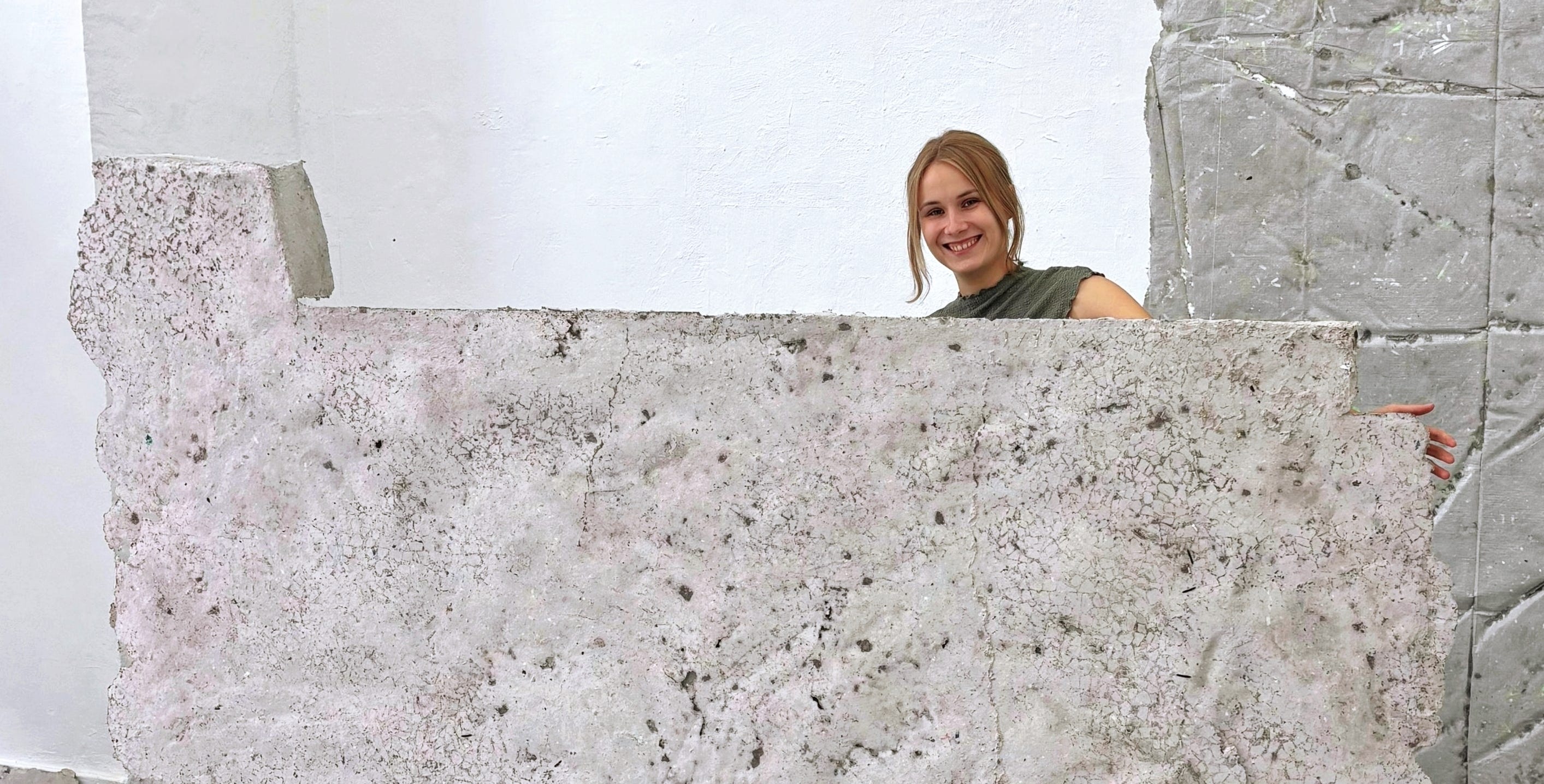
Silja Wendt lives and works in Düsseldorf, Germany. She completed her studies this year at the Kunstakademie Düsseldorf in the class of Prof. Martin Gostner, who also appointed her as a master student. Her work often explores questions of space and the environment, reflecting on the ways we shape it and how it, in turn, shapes us.
Instagram: https://www.instagram.com/silja.wendt


How would you describe your art?
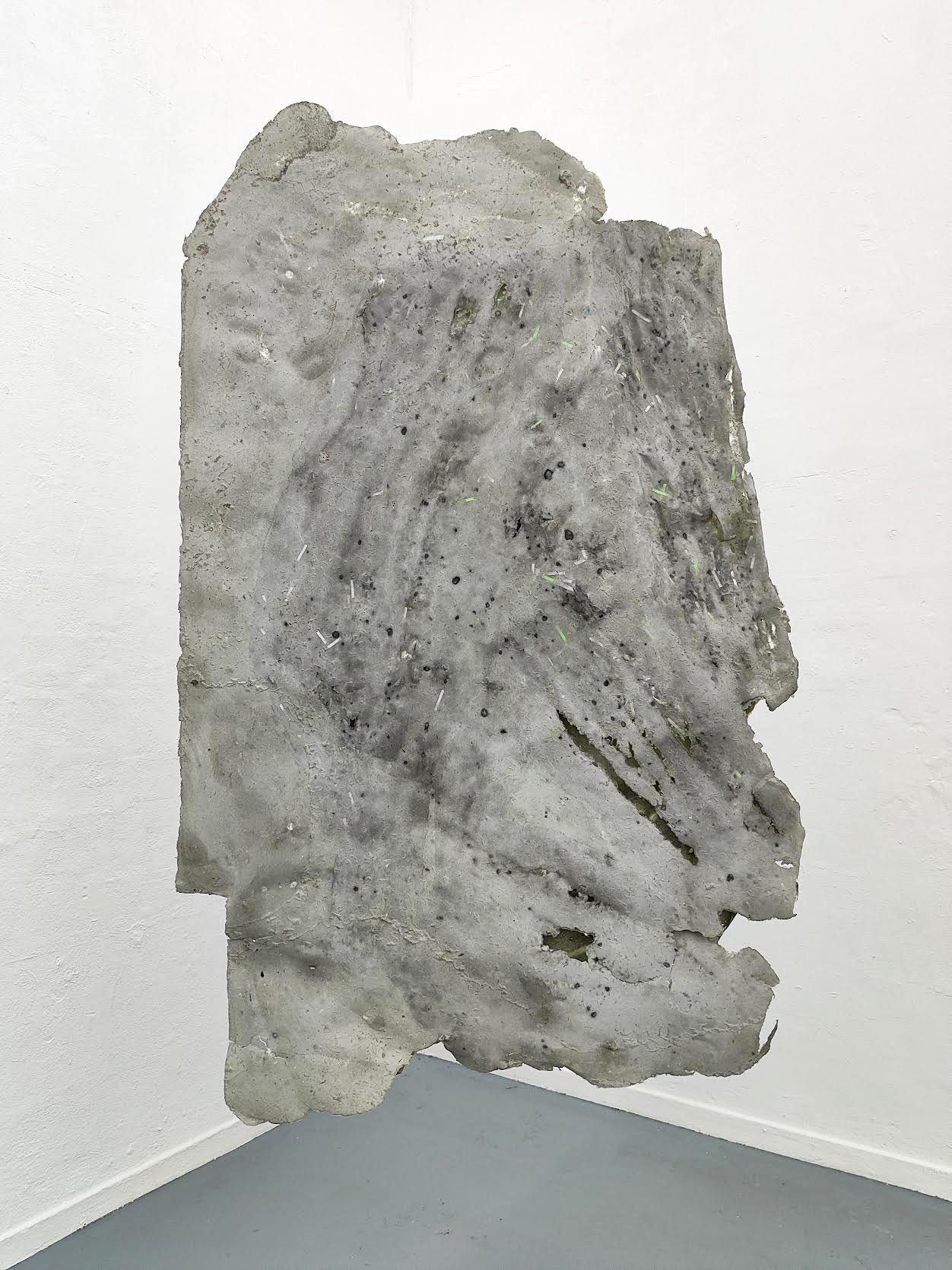
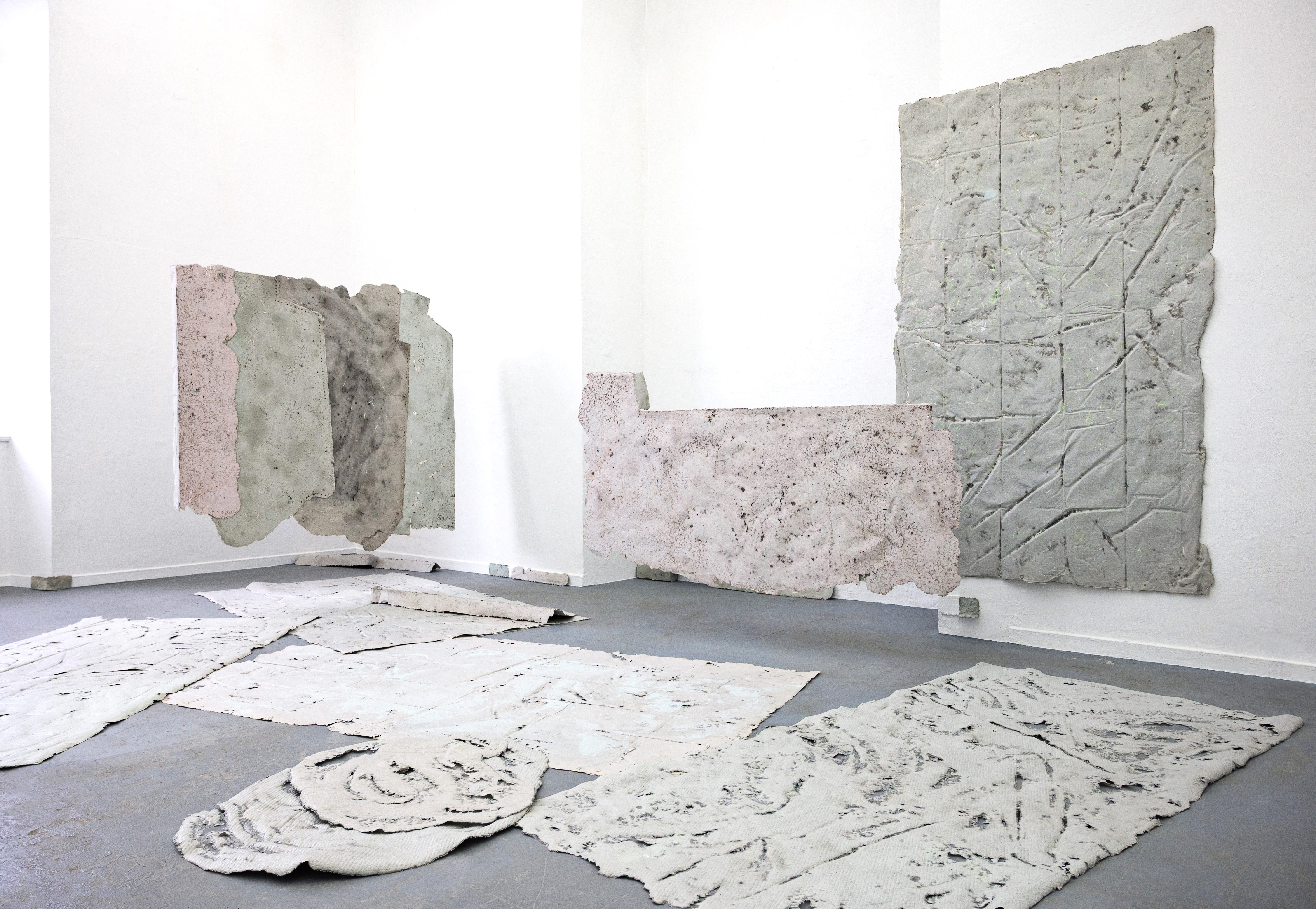
I think my works sometimes appear massive and heavy at first glance, yet they are actually very light and sensitive. They often convey a sense of spatiality, though not necessarily in the classical sense. They remind me of inner worlds of space, of poetic reflections on our surroundings. I often ask myself how we shape our environment and how it, in turn, influences us. I also believe there is always potential for change, and I also try to explore this through the material I work with. Many structures may seem rigid like stone, but in reality, they are malleable and flexible like paper.
What drives you to do what you do?
I believe that every process also generates potential for further processes. How can we make use of this potential and for how long, or how often? Recently, I have been focusing strongly on the material paper, which surrounds us abundantly in everyday life. When I create an installation, I often reuse material from it for the next work. That’s the wonderful thing about paper, it can always be reshaped into new forms.
I’m also often asked why I don’t integrate many other materials equally into my process. I think it is, among other things, the curiosity to explore all the different facets of this simplicity. I also hope to inspire others to discover potential in seemingly simple things and, through that, to release interesting processes.
What are your favorite items in your studio? Why?
I have a big bucket in my studio that I truly love. All the papers I gather end up in it, soaking and turning into pulp. It’s my magic bucket, whatever goes in comes out transformed.
What are you curious about? What would you like to explore further?
My graduation project was strongly shaped by the academy’s environment. I’m now looking forward to seeing how different places will influence my work in the future.


What makes an artwork “good” in your opinion? Why?
This is a difficult, yet also interesting question. I’m not sure I can fully answer it, as it depends on perspective. Sometimes art is simply necessary for the artist, and in those cases, it doesn’t really matter whether the viewer understands it. For the viewer, however, a work is probably successful when it touches them deeply in some way.
As an artist, one can also pursue this goal and be moved or surprised by one’s own work, which is always a very beautiful experiene.
I especially enjoy works that spark thought processes or inspire meaningful action or learning. But sometimes it is enough for me to simply be moved by the beauty or aura of a work. That too can leave a lasting impression and create a unique sensory experience. It reminds us what it means to be a sentient being.

