Susana Rocha
Interview with the multidisciplinary artist based in Lisbon, Portugal. Her practice revolves around the exploration of tensions, physical and emotional, through visual and material experimentation.
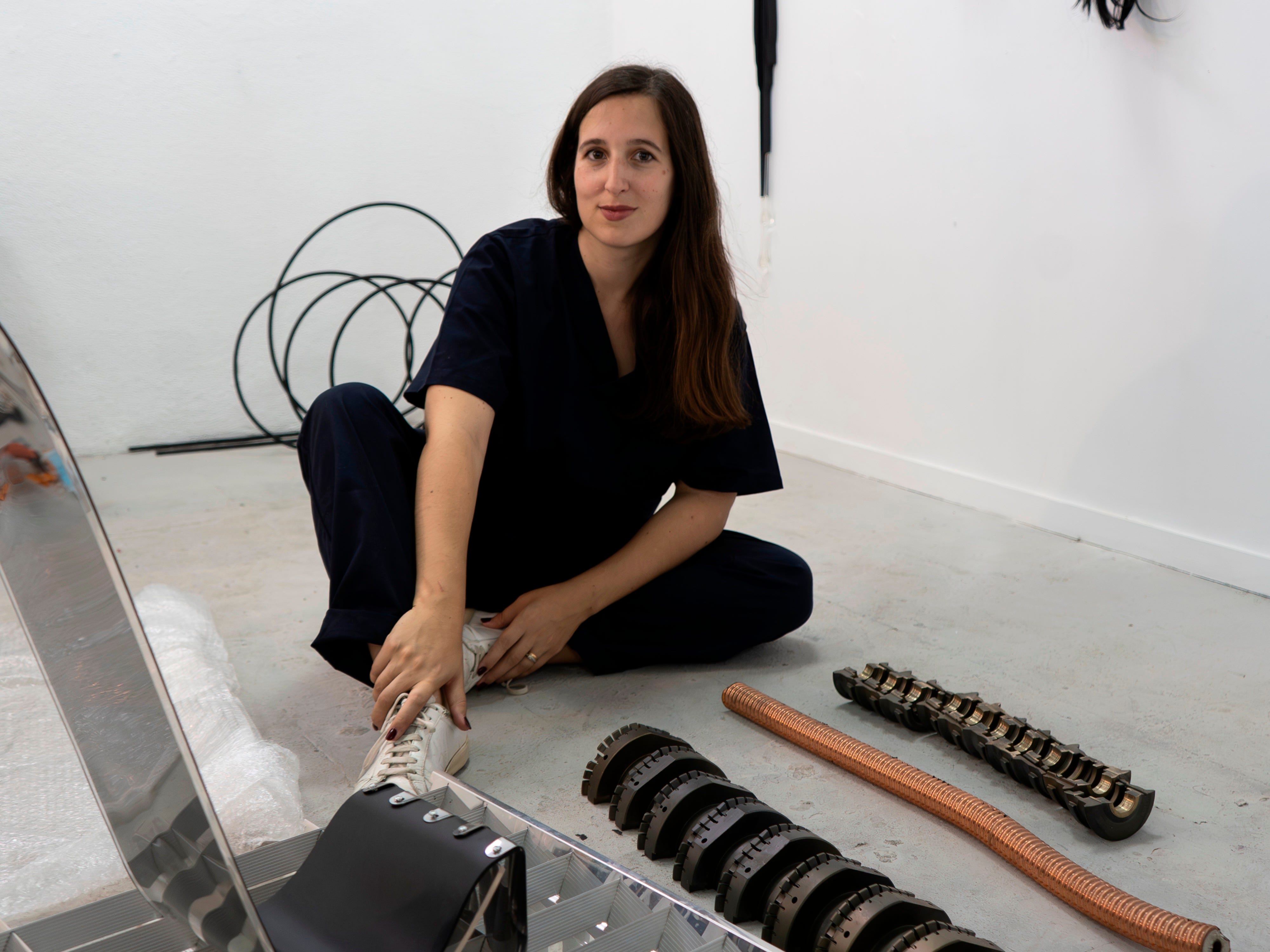
Susana Rocha is a portuguese multidisciplinary artist born in Braga and based in Lisbon, Portugal. She holds a PhD in Visual Arts, and master degrees in Painting and Visual Arts Teaching from the University of Lisbon. She is also the founder and Artistic Director of DUPLEX, an artist-run-space and art residency program.
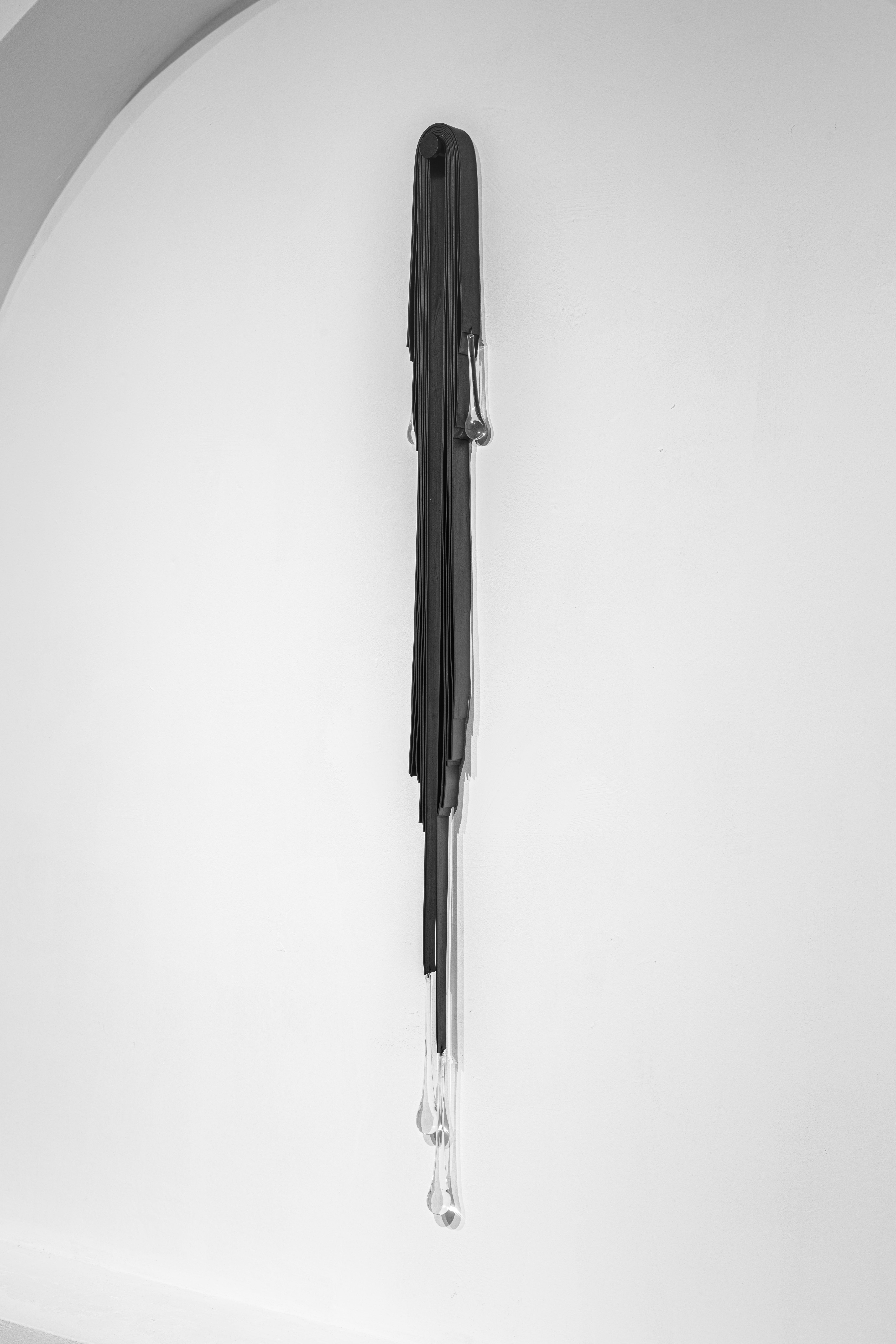
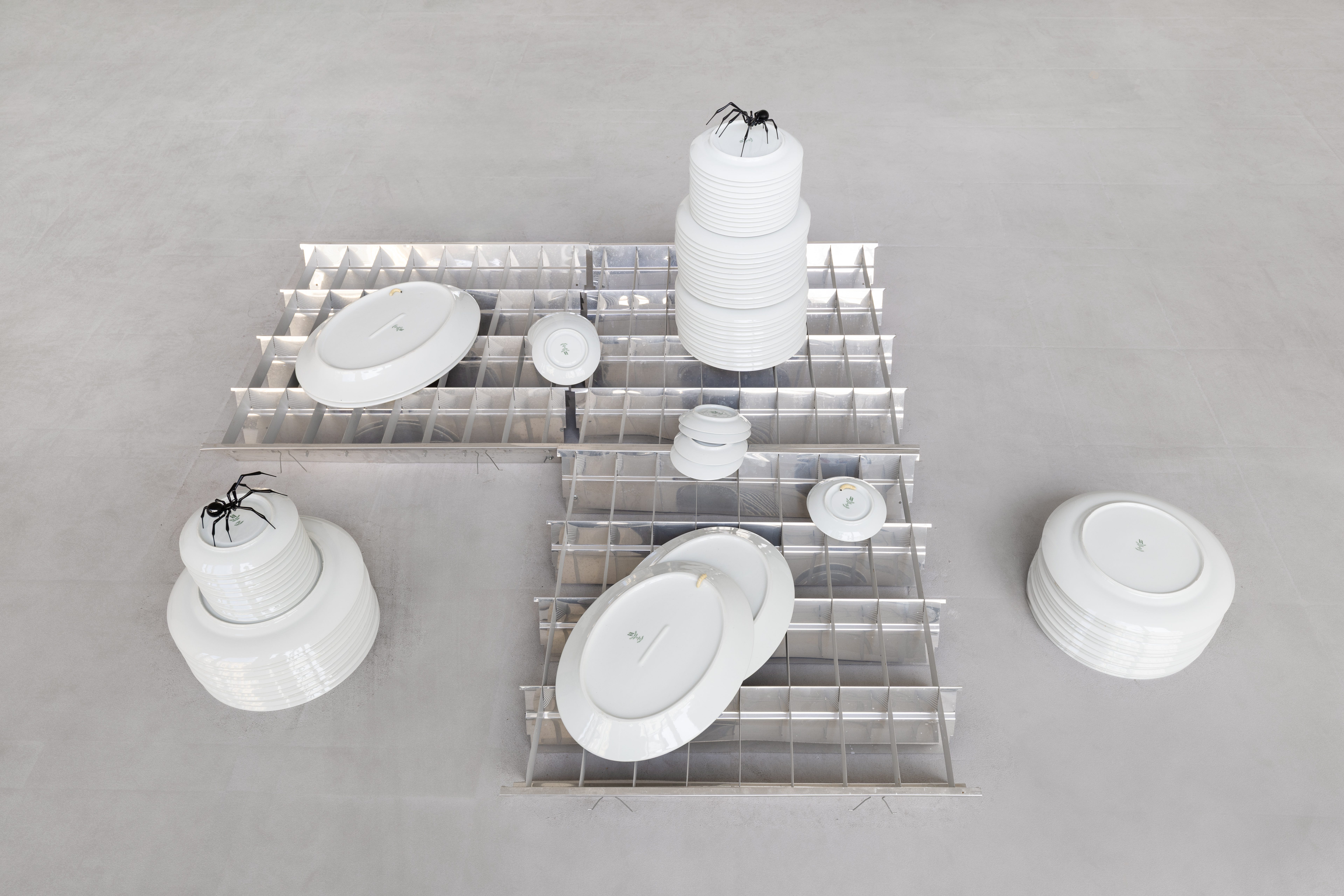
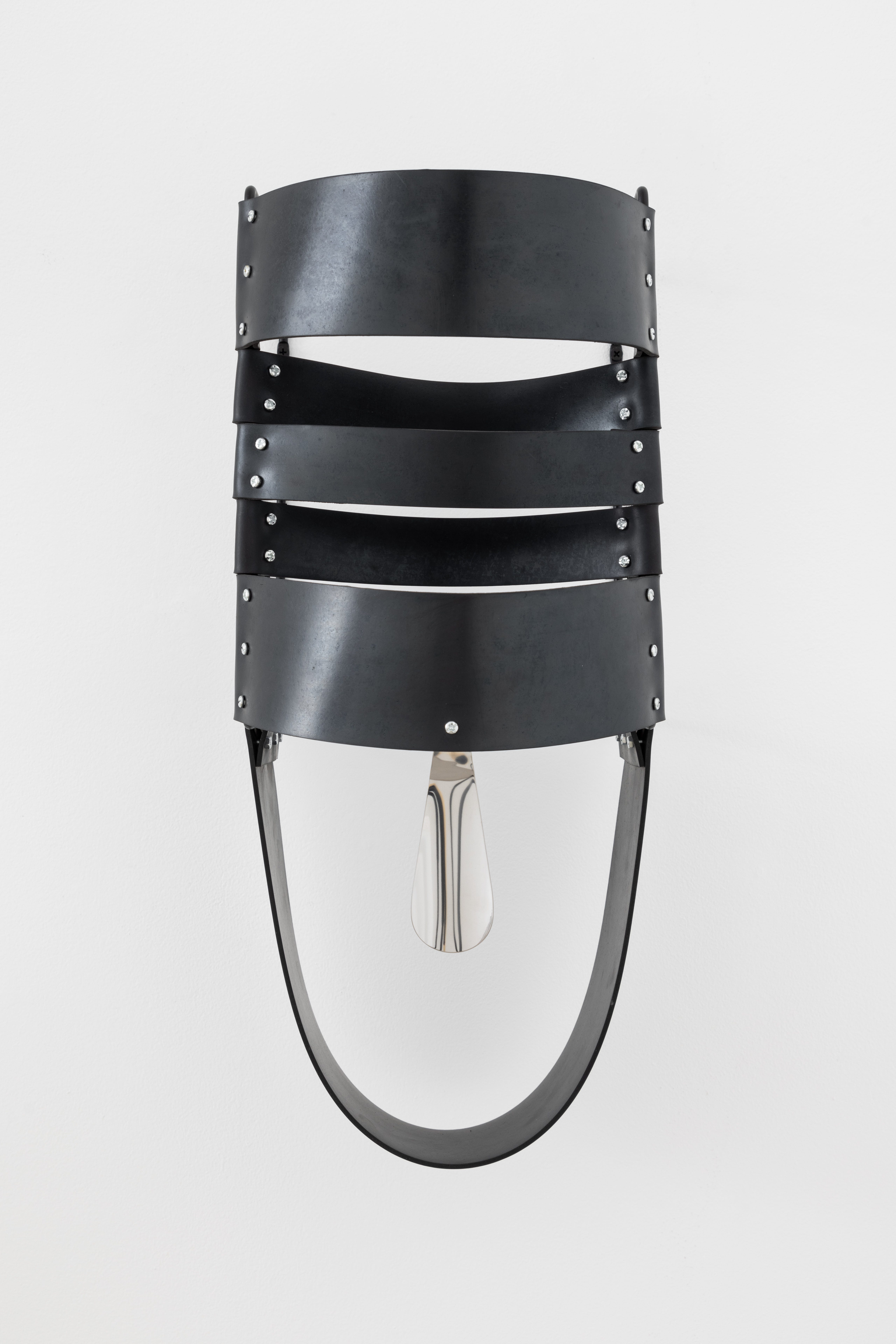
Her artistic practice revolves around the exploration of tensions, both physical and emotional, through visual and material experimentation. These tensions often relate to universal experiences such as anxiety, grief, fear, loss, inability, failure, memory and the absurd. Rather than presenting direct biography, her work uses metaphorical and sensory references to the body as a common ground. She uses a wide range of materials with symbolic potential - such as rubber, glass, metal, and other manipulated or appropriated materials - to evoke bodily responses, limitations, and psychological states.
Website: www.susanarocha.com
Instagram: susana.v.rocha
Susana Rocha was recommended by Emese Kádár.


What themes do you explore in your practice?
I think tension sits at the core of my practice. I’m drawn to moments of emotional and physical distress, states where pressure shapes how we experience ourselves. So in short, the body and the psyche form my primary field of exploration.
I use my personal experience of loss, discomfort, failure, fear, unadjustment, womanhood and motherhood, to face feelings that in the end are quite universal.
It is also fair to say that my upbringing was deeply influenced by the medical world, it’s ethics and aesthetics, which naturally weaved its way into my work.
What drives you to do what you do?
I think, as for many artists, I need to understand and give form to experiences that are difficult to articulate and then be able to communicate them.
Ideally, I want to spark a sense of connection or at least recognition and because our range of emotions is so vast and so calibrated to our own history—meaning, the feelings I evoce might be universal but the way we process them is very particular—I focus on the body and its by-products, as a constant reference to what are the most basic similarities between all of us.
Beyond that, my enthusiasm for materials, and their metaphorical potential, drives me to pursue possible translations between concept and execution, in a constant learning process.
What kind of atmosphere do you like when you work? Why?
I’m not very particular about the general atmosphere, in the sense that I don’t need any set of extraordinary tangible conditions. But I work at Duplex, a big shared studio space, so I paradoxically need quietness, which we have, and human presence, which we also have. I find it quite difficult to work in an isolated studio. To have fellow artists close by, to share a coffee with, to exchange ideas, or to generally share a sense of community, became crucial to me.
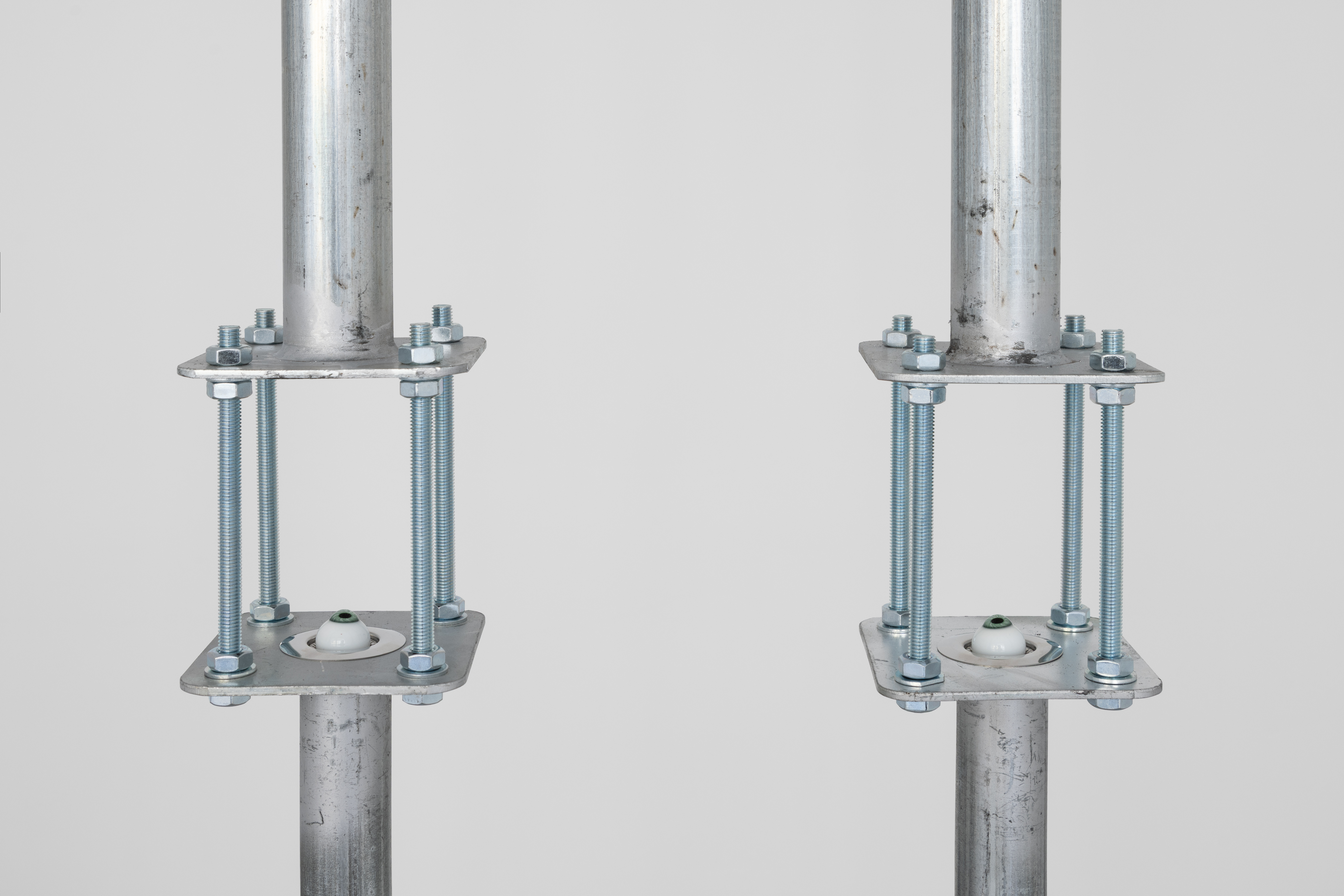
As for the conditions of the space itself: I need my studio to be minimally organized, and I like to divide it into two main areas. One to work, which changes quite a lot depending on what I’m producing, and another to have a clean and clear view of the work itself or to manipulate the way the work is going to be seen or perceived, much like an impromptu “exhibition space”.
Beyond that, I prefer to start working early in the morning and work until mid afternoon. I like to listen to music. Spotify tells me I listen to “The Nationals” the most. Or to crime podcasts. And I don’t live without coffee.
What are you curious about? What would you like to explore further?
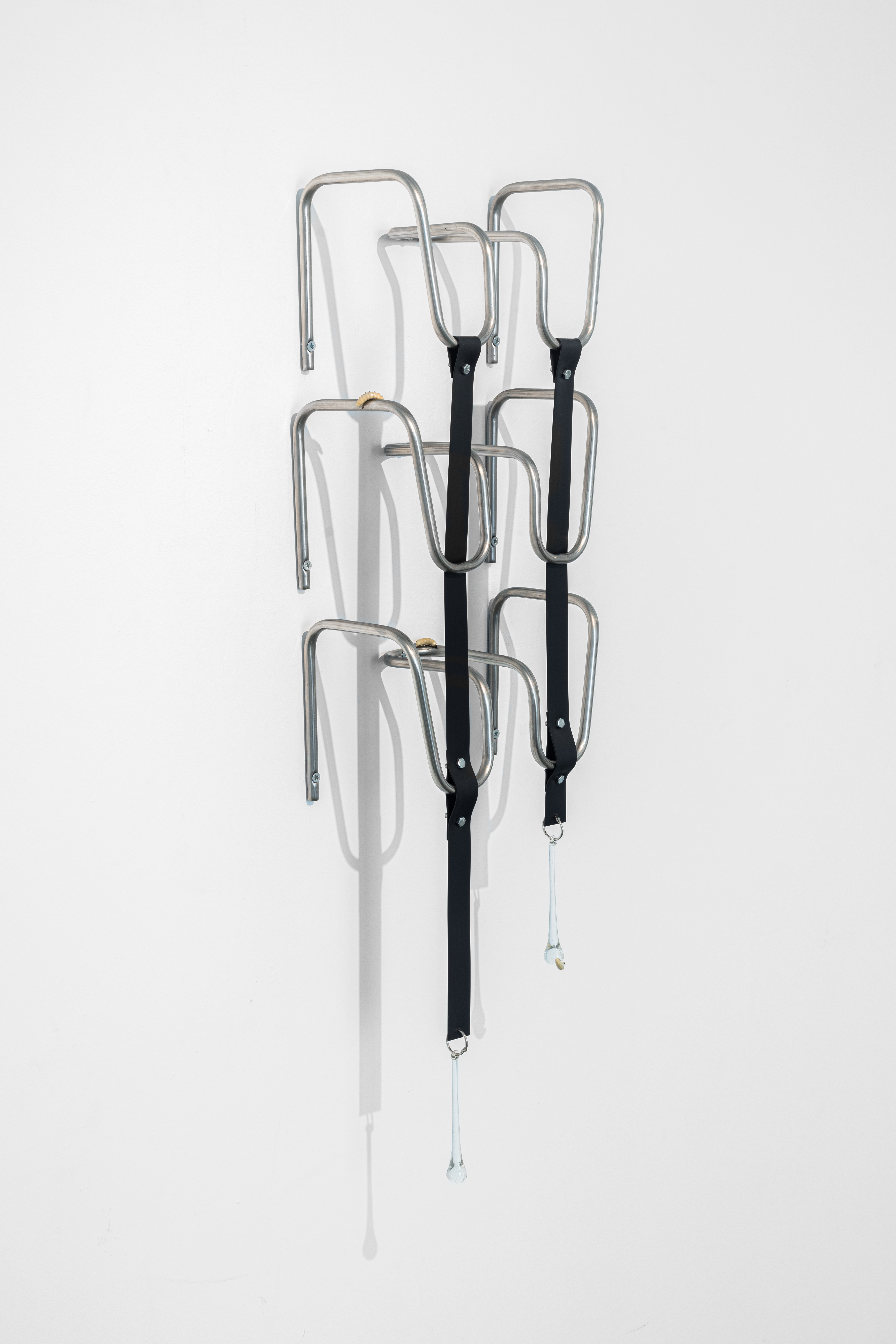
That’s kind of a personal problem... I’m always jumping between materials, techniques, or interests. Glass, rubber, metal, and objects are so far my most constant materials. Given that, right now, I’m very interested in welding. I tried it for the first time not long ago, and I’m now looking to have a MIG at the studio. I want to be able to play with it, even if I don’t expect to master it. I mainly want to be able to produce small supports and other connection elements by myself, without depending on anyone else.
I also want to work with sound, light, stone... and possibly jewelry techniques.
What makes an artwork “good” in your opinion? Why?
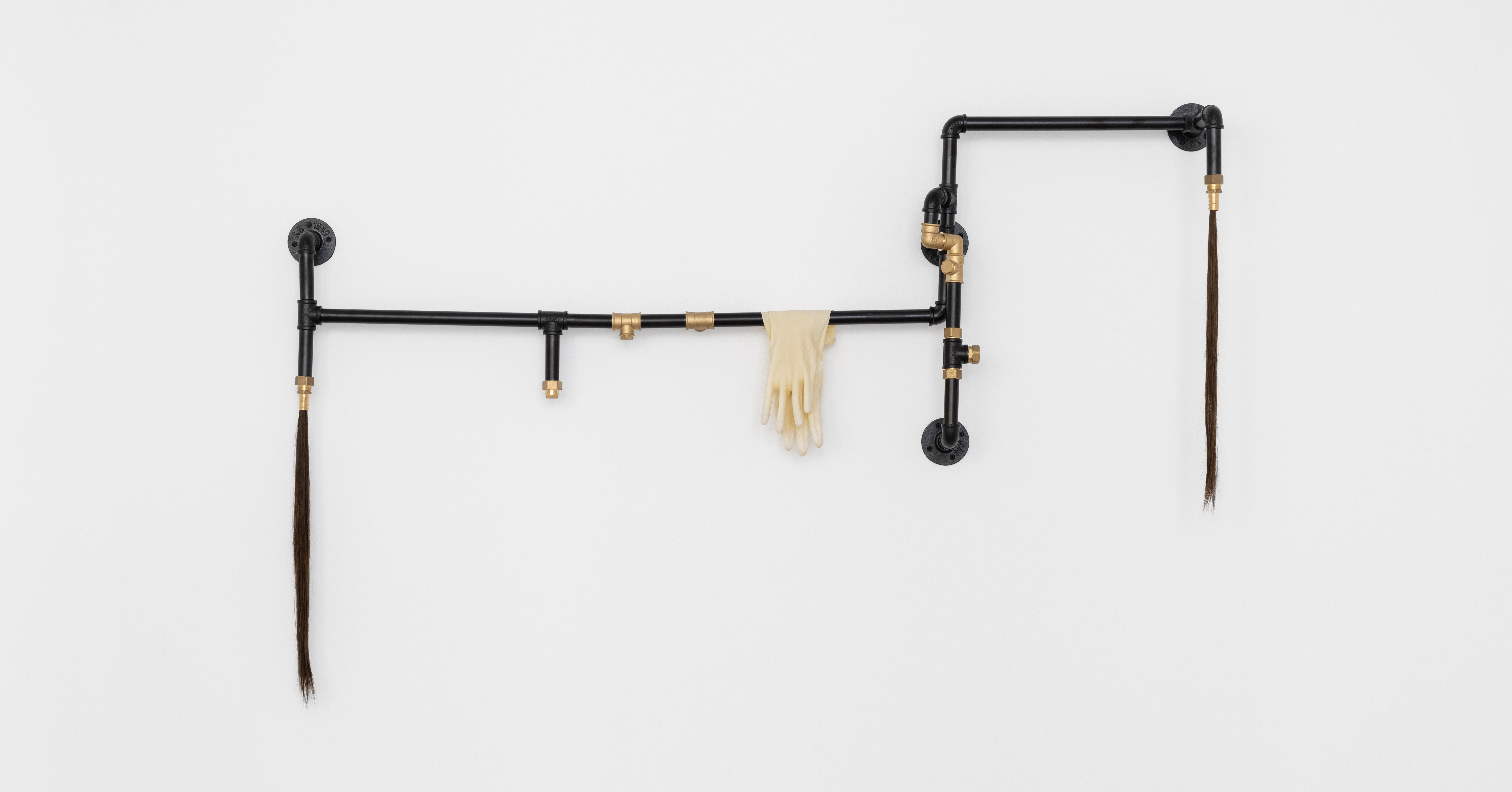
If we are talking about my work, I would say that I feel the most satisfied when it shows a mix of well executed techniques, as I tend to combine materials, a particular sense of restraint and refinement, and clarity of intent.
As for “good” artworks in general—whatever “good” may be—for me it has to do with resonance, capability and intention. I know often artists mention “honesty” as a crucial attribute, but I’m not sure we can assess honesty. Instead, I would say that an artwork also needs to be, somehow, contextual to the artist.