

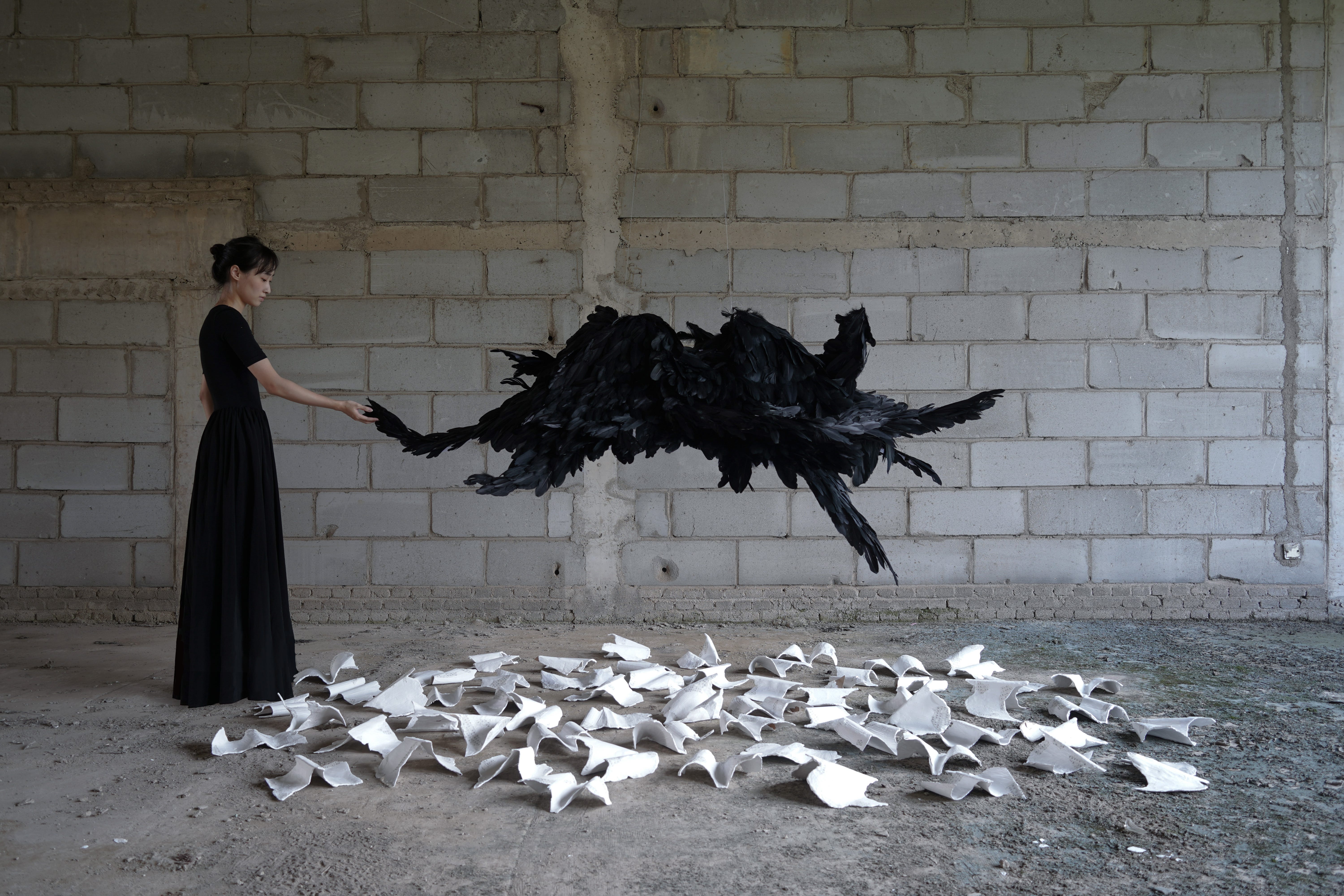
Aura Sun (b. 2001) is an artist and spiritual practitioner. She received her BA in Product Design from the Central Academy of Fine Arts and later completed an MA in Sculpture at the Royal College of Art in the UK. Her work constructs landscapes of the unconscious, dissociating an enchanted poetics from reality. Moving like a spiritual alchemist, she maintains a state of fluidity between matter and material. As she notes, “Through art, I try my best to perceive the starlight hidden within the human soul,” a gesture that signals both the return of spirituality and the quiet rebuilding of a spiritual home.
Website: https://www.ariasunglitters.com
Instagram: https://www.instagram.com/solar_aura_/
What guides your artistic research?
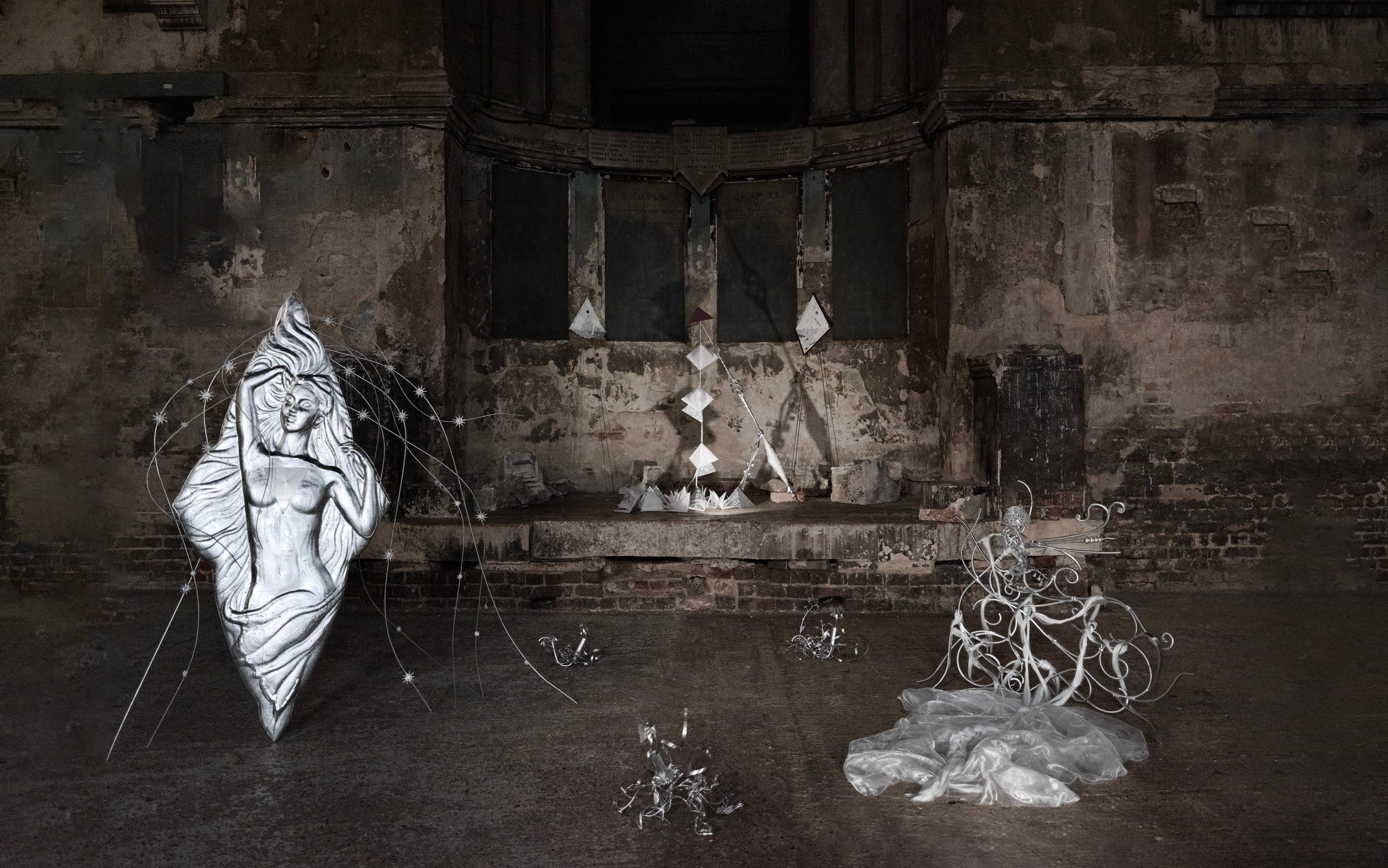
The construction of my inner narrative under a Hermetic1 context. I have been immersed in a world of fantasy for as long as I can remember. My mind continuously stages countless scenes, and sometimes they turn into still images that linger for a long time. From the texture of these narratives, and from the gaps between these images, many thought-provoking sentences split off from me inexplicably. I capture the energetic qualities of these languages and explore their esoteric connections with their corresponding images.
What are you working on right now?
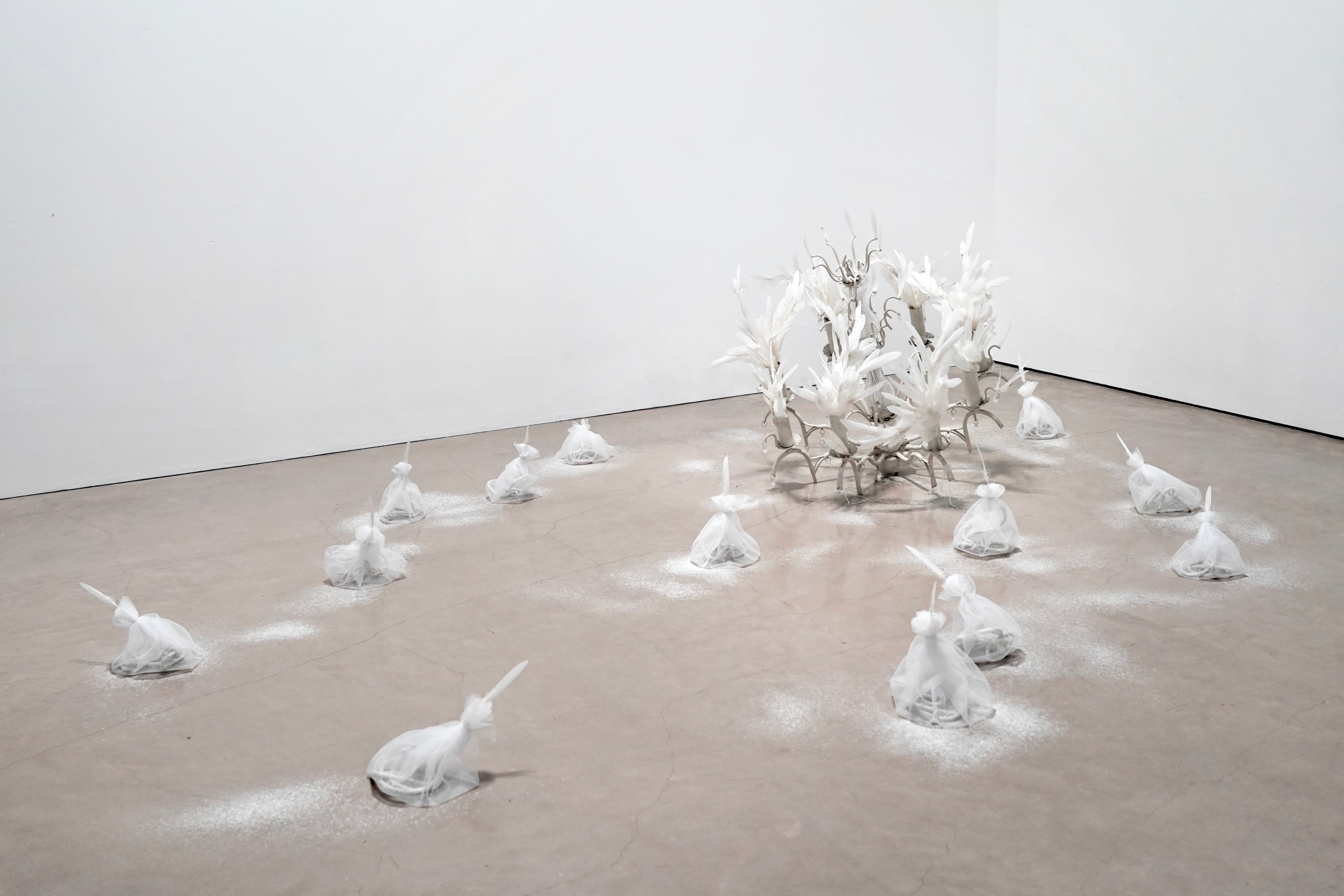
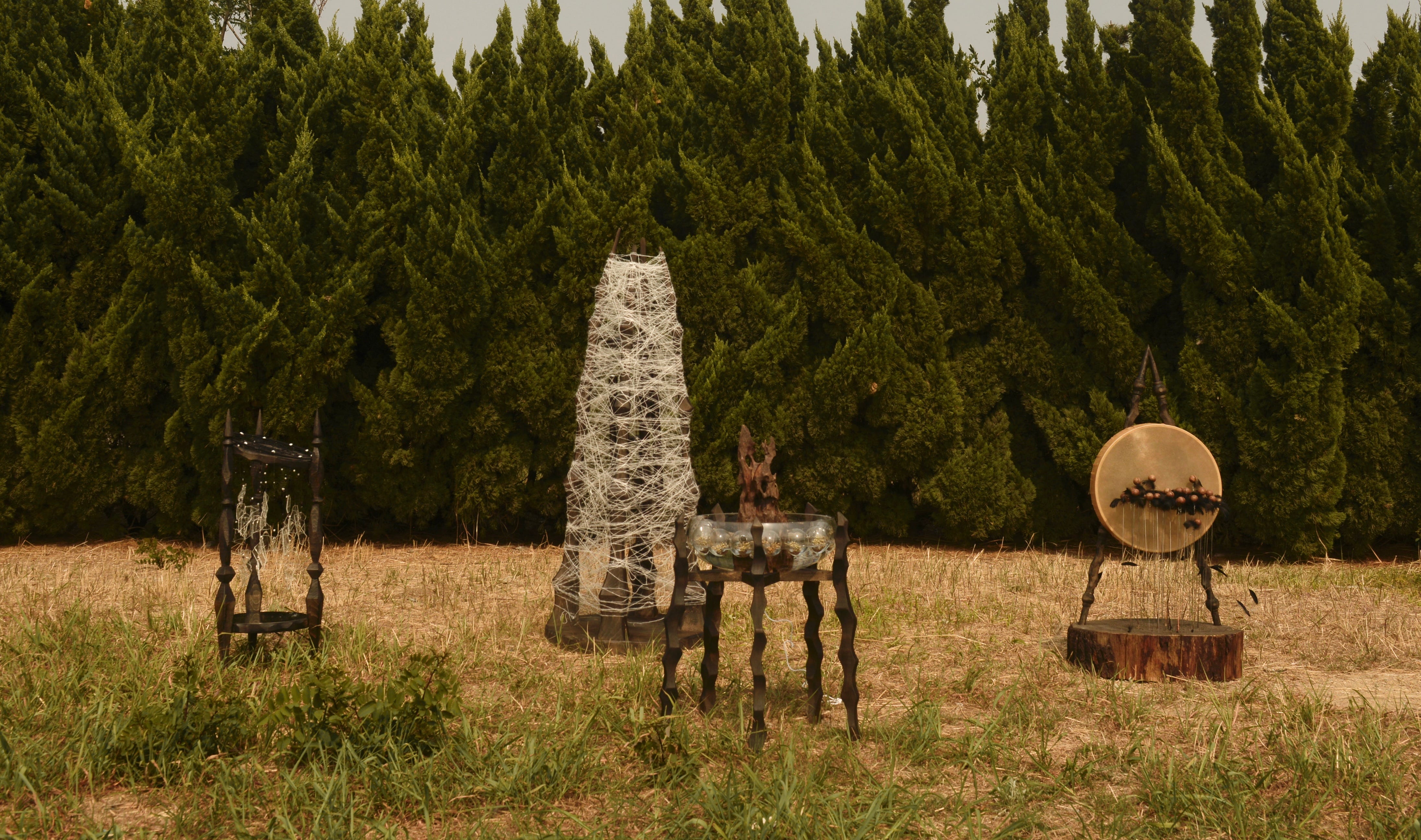
I have recently been studying astro-theology and the sacred geometry of the cosmos, and my trip to Prague not long ago gave me infinite inspiration. My upbringing was filled with order and discipline. Those rules—once something I desperately wanted to escape—have now somehow transformed into a dependency on a certain “pattern of patterns.” I am completing a series of wall-mounted installations in which I further extend the language of paper as a material that repeatedly appears in my earlier works—a material that has accompanied my growth like archival documents. Through it, I attempt to express a kind of “admonition from the cosmos,” like Emerson’s “admonition of nature.”2 It is not a harsh teaching, but a steady guidance.
When you feel stuck, how do you get un-stuck?
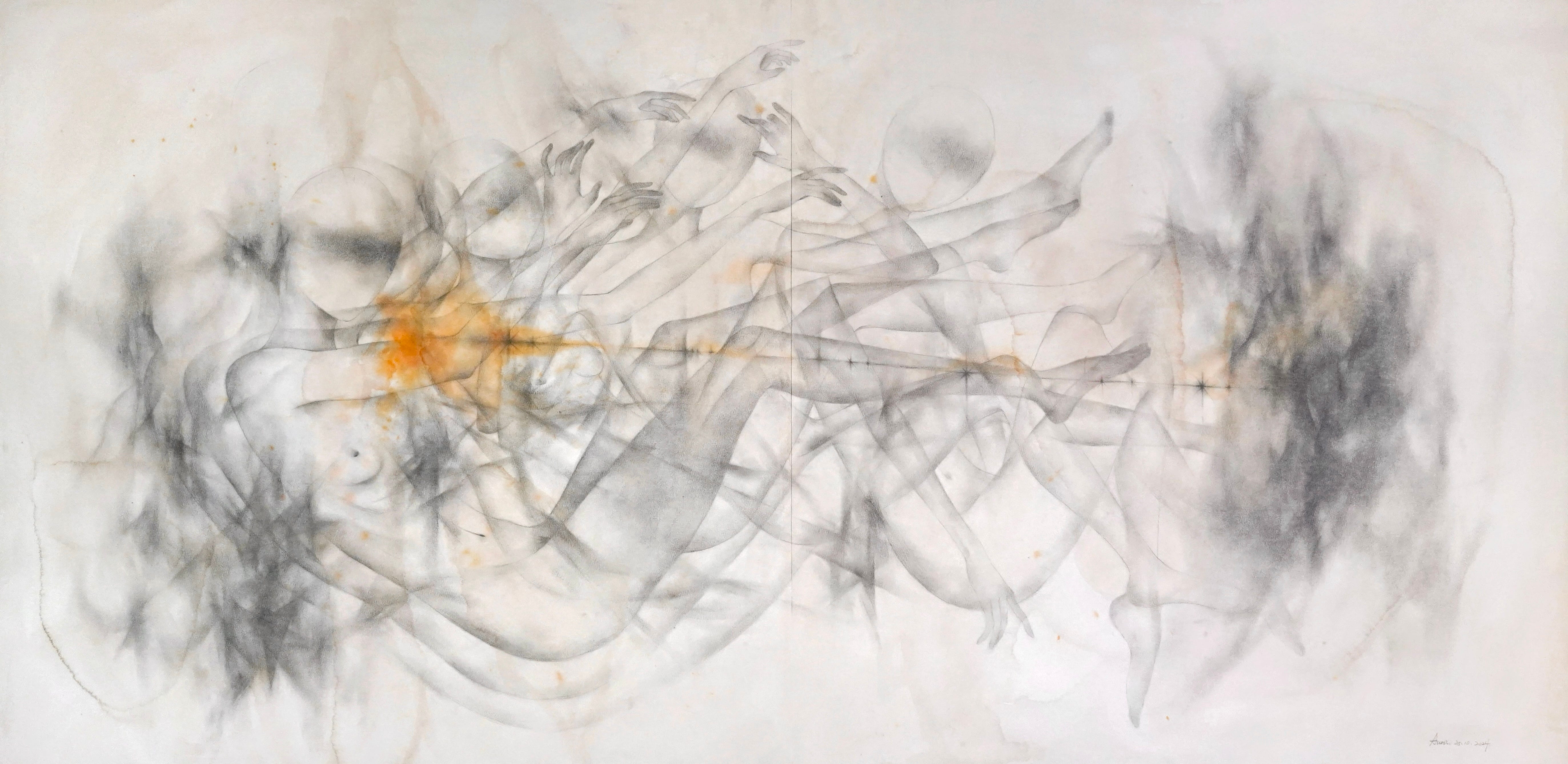
I would read a book very, very, very slowly, as if I were writing it by reading it. I read so slowly that I almost fall asleep, and then I lie down on my bed. In that half-dreaming state, I receive pulsed signals from my dreams. It is a strange method, but it always works.
I would also make myself forget that I am a creator and become an experiencer of art instead—traveling, walking, and perceiving the multidimensional images of the world in infinitely subdivided ways. I always believe that you’ll never actually “stuck,” because all energies between heaven and earth are constantly, actively surging and generating new life at every moment. The feeling of being stuck comes from an imbalance in our own energy conduit, so we must let go and relax.
What inspired you recently?
Definitely David Lynch. I had never watched his works systematically until I recently restarted Twin Peaks. I was amazed by how calmly, objectively, and yet with such refreshing curiosity he integrates the images of the personal unconscious and the collective unconscious—an inner work I once avoided greatly.
I also read László Krasznahorkai’s Satantango and was astonished by his development of the materiality of language. I think his writing is sculptural, and for someone like me—trained in sculpture and highly sensitive to language, it was essentially inspiring.
What makes an artwork “good” in your opinion? Why?
Authenticity. I believe there is no “good” or “bad” in art—only the true and the false. When a person is completely honest with themselves and allows the image reflected by that inner clear mirror to descend truthfully into the material world, they become a real artist—an archetype of the magician, like in the tarot. The Magician in tarot has one hand pointing to the universe and the other to the ground. In this authentic state, he lets the energy flow into him and out of him, and thus becomes infinite creativity itself.
Hermeticism, or Hermetism, is a philosophical and religious tradition. This system encompasses a wide range of esoteric knowledge, including aspects of alchemy, astrology, and theurgy, and has significantly influenced various mystical and occult traditions throughout history. More info for initial information: https://en.wikipedia.org/wiki/Hermeticism.
Small explanation by the artist: “As I understand it, it refers to the way the universe discloses its fundamental laws through all things—from the blooming of the smallest flower to the slow formation of mountains—each containing lessons worth studying. Yet today, I observe a gradual decline in modern people’s sensitivity to such correspondences. Therefore, I try to emphasize the necessity of these lessons, proposing a kind of admonitory guidance that leads us back toward a spiritual attunement.” More initial reading on the american essayist, lecturer, philosopher, minister, abolitionist, and poet who led the Transcendentalist movement of the mid-19th century, Ralph Waldo Emerson: https://en.wikipedia.org/wiki/Ralph_Waldo_Emerson.
I am so inspired by her practice of reading and allowing herself to go inward. This kind of self trust - spiritual - approach is something we don't hear often enough nor do we take it seriously enough. A really brilliant interview - thank you.
Oh my God, I found this interview incredible! The part where she talks about the personal and collective unconscious in David Lynch’s work (I’m also rewatching Twin Peaks, and it’s such a masterpiece). And the way she explains what “good” art is? Amazing.