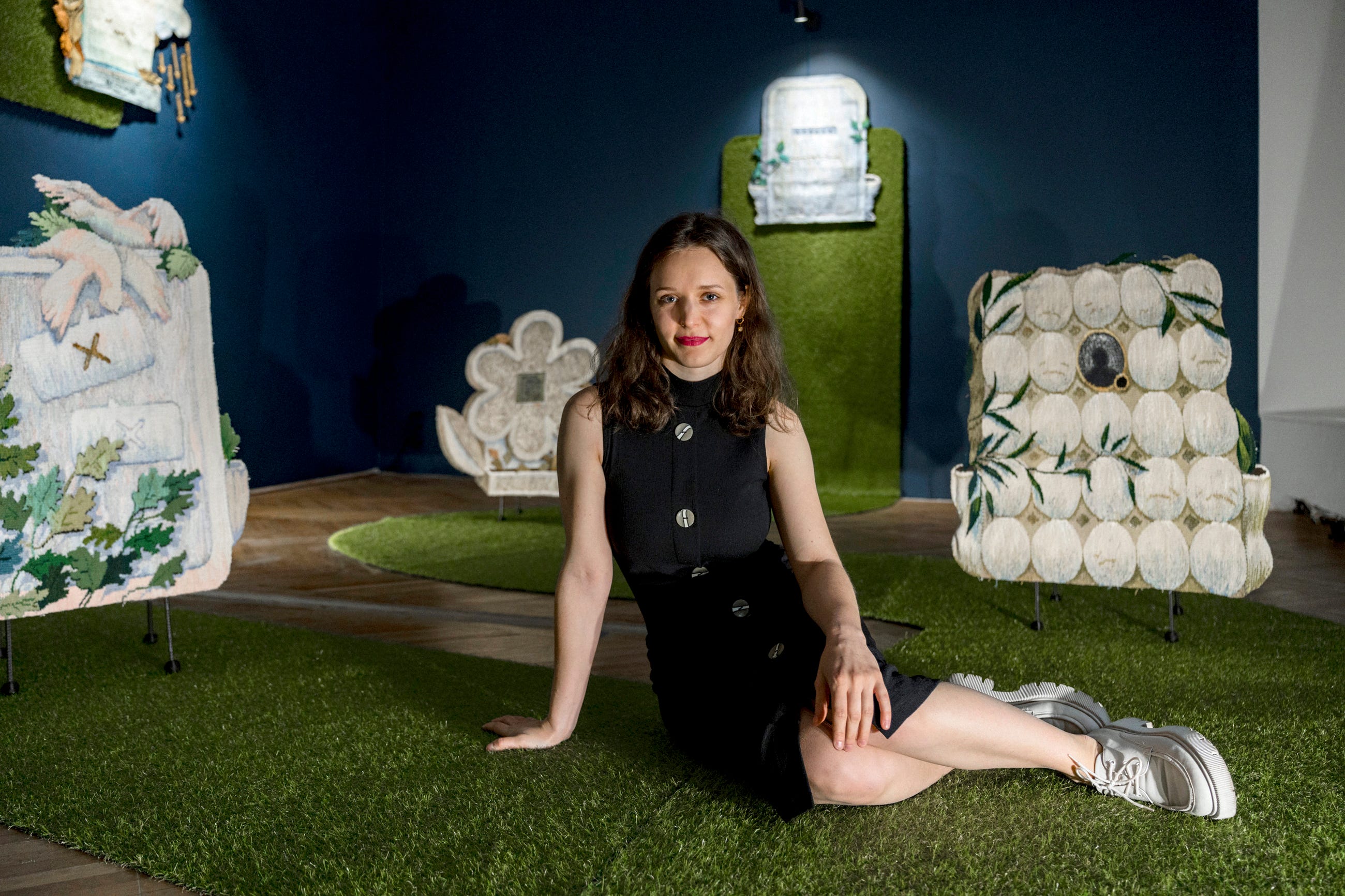
Emese Kádár is a Budapest-based artist who graduated as a painter from the Hungarian University of Fine Arts. Her work explores the impact of digitalization on emotions and belief systems, as well as its intersections with traditional practices. She is particularly interested in how digitalization affects our emotional life and belief systems, how traditions persist in the present, and where these aspects converge or diverge. Her primary mediums are tapestry weaving and transferring digital drawings onto gypsum plates, through which she explores themes such as grief and mortality, and also reflects on the impact of lost or misunderstood information. These questions concern her both as collective phenomena and from a personal perspective, so the therapeutic nature of the process also plays a quietly important role in her practice.
Website: https://emesekadar.com
Instagram: https://www.instagram.com/kadaremese/
Emese Kádár was recommended by Martha Kicsiny (click here to read the interview with Martha Kicsiny).
What themes and motifs do you explore in your work?
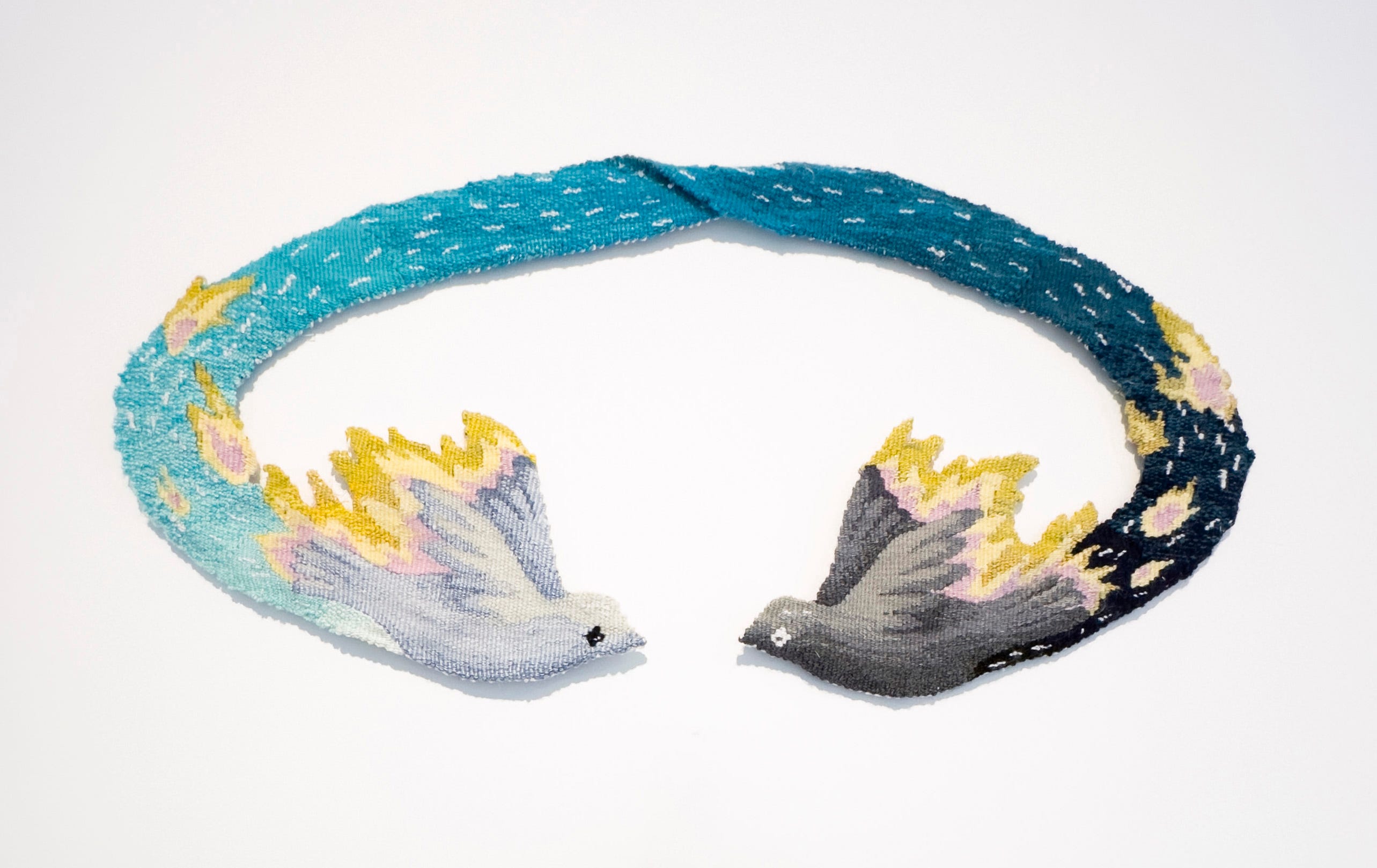
In my work, I most often explore themes that have preoccupied humanity across the ages. One such theme is the question of transience, which I have examined in various ways over the past few years, both in relation to the fear of death and in terms of grief. These timeless themes allow the past and present ways of thinking to meet, providing an opportunity to place the new perspectives brought by the present into a broader context. I use this duality in the execution of my works as well: I design digitally and then work with traditional, handcrafted techniques. Similarly, when developing forms and motifs, I draw inspiration from both contemporary and historical visual language.


The motifs I use are often inherently somber, connected to grief, remembrance, or negative emotions, but they dissolve into a visual language inspired by social media, carrying a lighter, straightforward honesty, and sometimes humor. Behind this lies an attempt to balance: in my work, I am interested in a mixture of the somber and the light, one that carries just enough weight from the serious questions posed to make it accessible to others, and therapeutically valuable for me.
What is a challenge you faced recently?
Most of the time, I approach my subjects from a collectively relevant, general perspective, but personal involvement inevitably comes into play, and it is a fundamental source of my work. I usually communicate this only very subtly or within a small circle. Still, it has always been my aspiration to achieve healing through creation, to conclude a grieving process that has lasted twelve years by now.
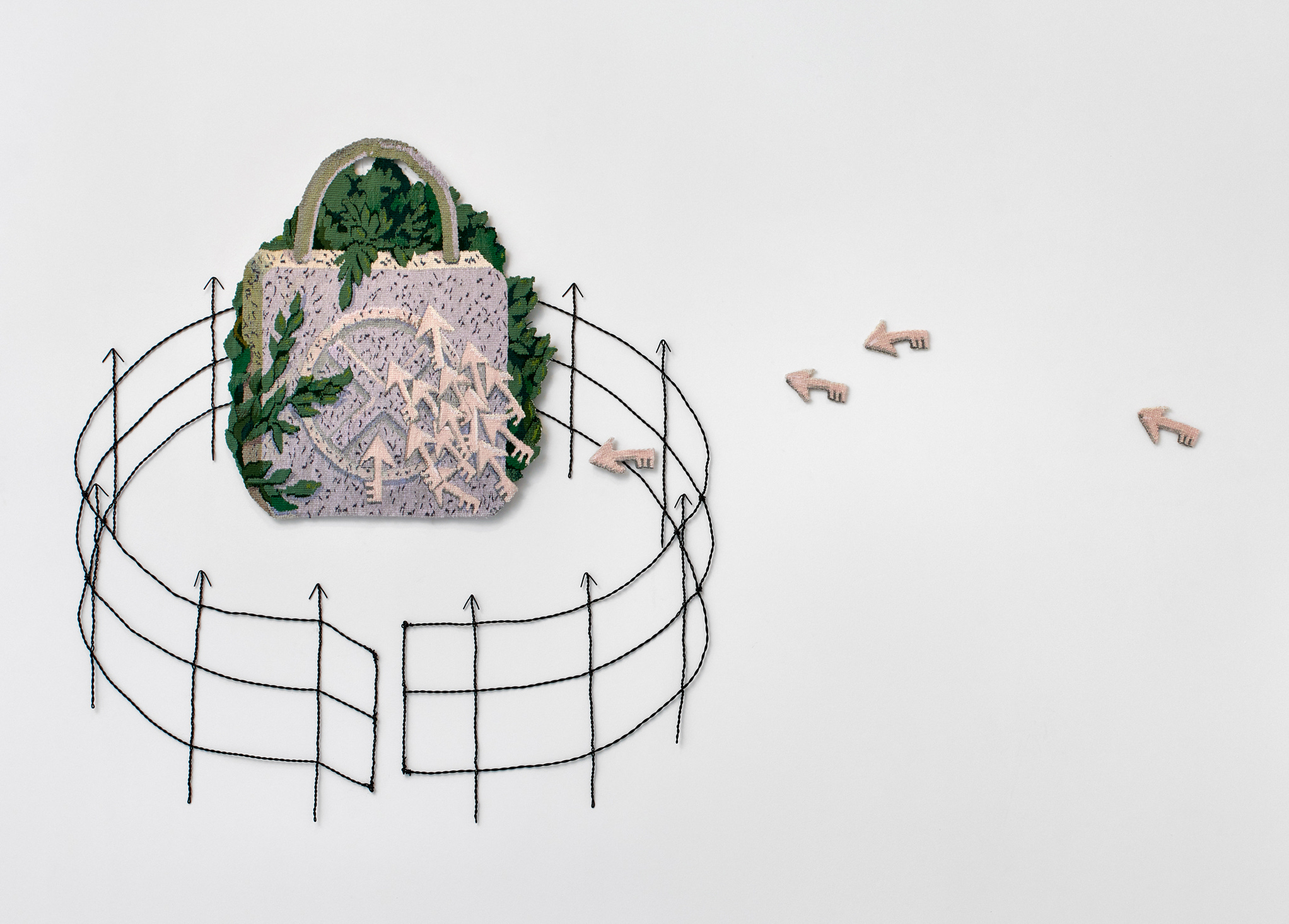
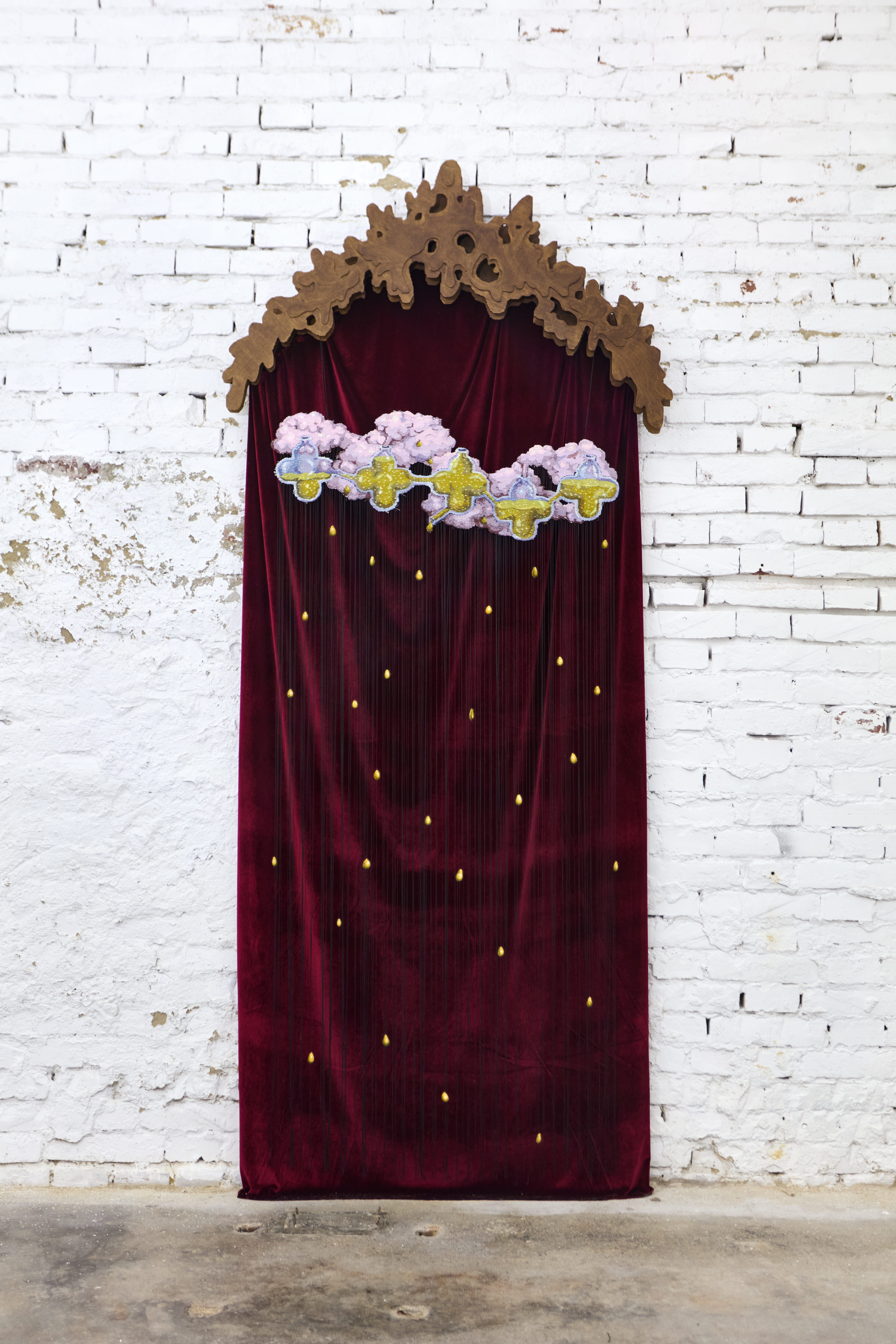
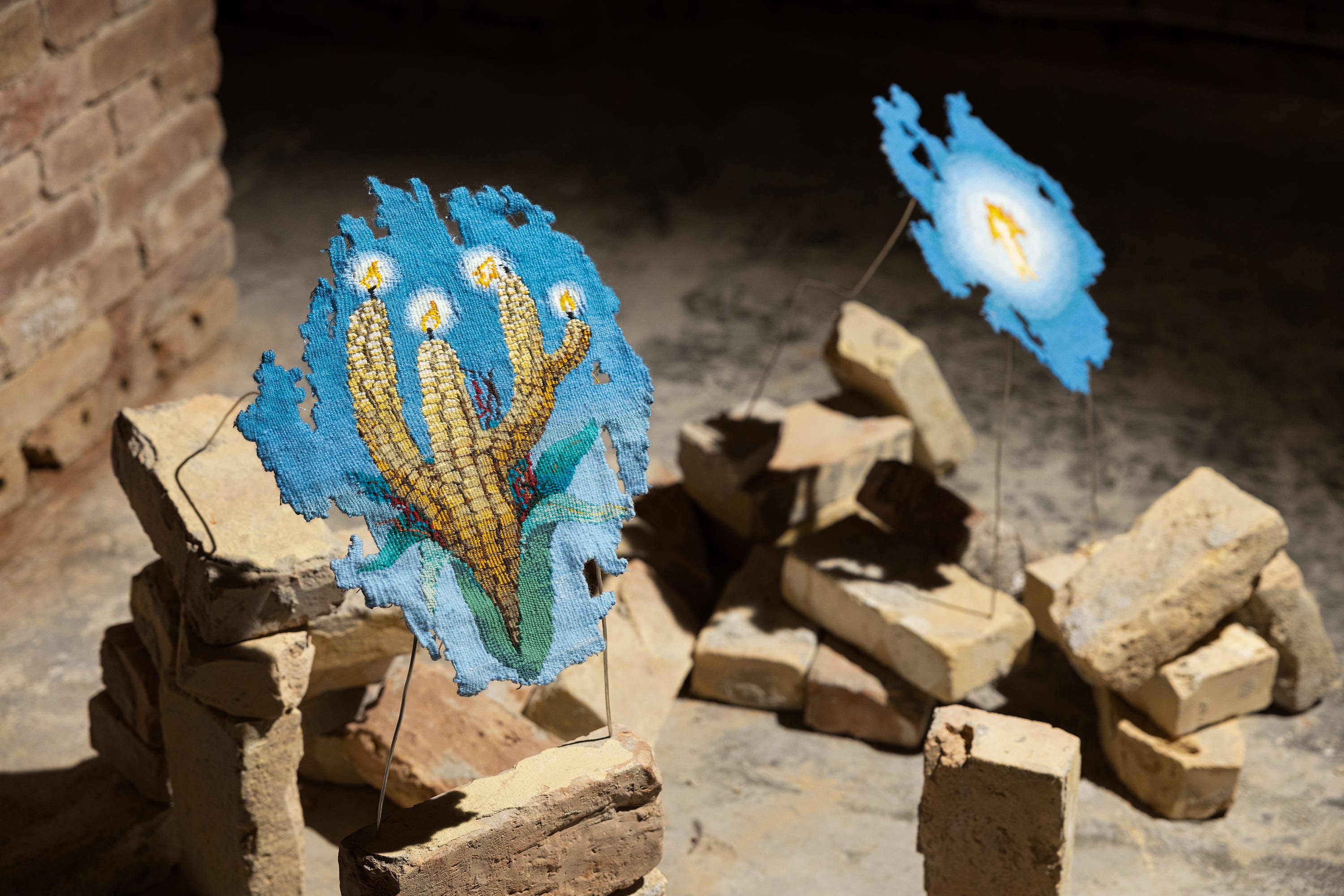
Last year, through the exhibition of my project NOT_FOUND, which took a year and a half to prepare, I attempted to put an end to the works dealing directly with grief. The series drew parallels between fading memory and the loss of digitally stored memories, adressing data loss as a contemporary obstacle in the grieving process. The attempt at closure proved unsuccessful, as the works I have created since then have circled back to the earlier theme or opened new directions within it. I had to allow this return, and I am currently again focused on grief and the state of emotional freezing. The current project contrasts with my previous approach: it questions whether the increased ability to revisit memories might actually create a more emotionally hardened state.
When you feel stuck, how do you get un-stuck?
I often spend weeks or even months on the execution of a single work, so my ideas must undergo a strong selection process. The weight of this alone can lead to creative block. Lately, to prevent this, I have placed greater emphasis on the idea-generation phase, during which I enjoy manual creation without conscious conceptualization. The most important thing for me at these times is to allow myself the time to overcome the blockage and to continue working on something — even if it is just coloring or toning a previous, unfinished sketch in my sketchbook. I also set time boundaries for myself: I determine a minimum amount of time to spend on creation, even if it initially seems completely meaningless or aimless.
What makes an artwork “good” in your opinion?
Although I do not have a fixed opinion on what makes an artwork “good,” over the years and through experiencing many works, I have become increasingly clear about what resonates with me. I appreciate it when an artist is authentic, someone who draws from both personal experience and observation of the world, leaving space for the viewer to connect emotionally and intellectually.
I can also recognize when a work is created by an experienced artist, as skill benefits not only the viewer but also the artist during the creative process. Such an artist skillfully selects between visual and conceptual directions, which reinforces the appearance of intentionality. This, alongside the subconscious process I mentioned earlier, is also an essential quality in the works I find appealing.
What would you like to explore further?
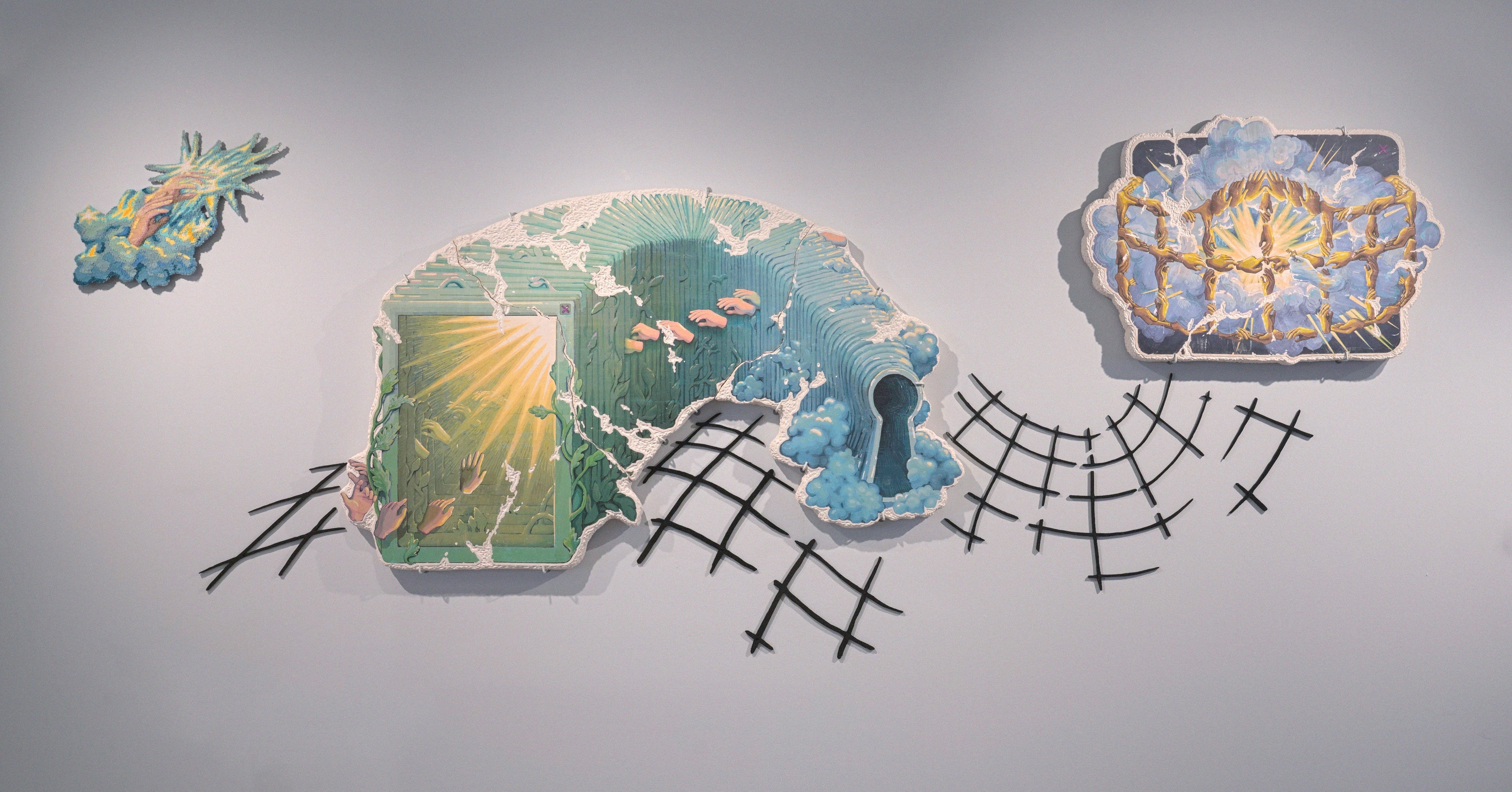
Over the past several years, I found a media basis in tapestry weaving and transferring digital drawings onto plaster, which I originally approached as a painter due to my studies. Gradually, I began producing works that I consider objects, which I exhibit both as wall installations and as pieces integrated into the space.
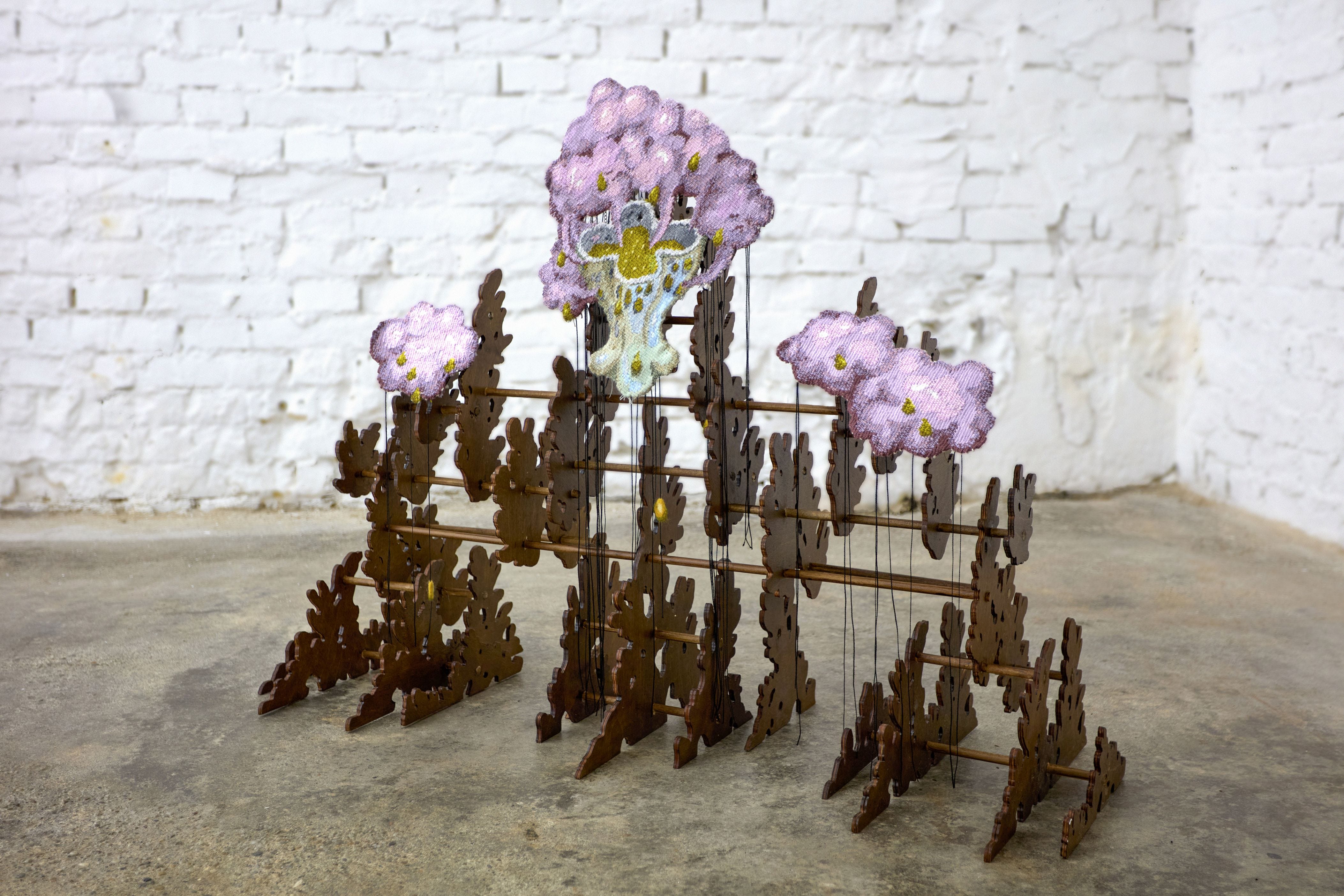
Currently, I am interested in exploring how far I can expand into spatiality while retaining the main characteristics of two-dimensional thinking. Over the past year, I have complemented my woven works with supporting elements made from laser-cut flat shapes, which, unlike before, are structurally integral to the works. This has led me in a direction where the central element is a sculptural approach, which I aim to further develop in the coming years.