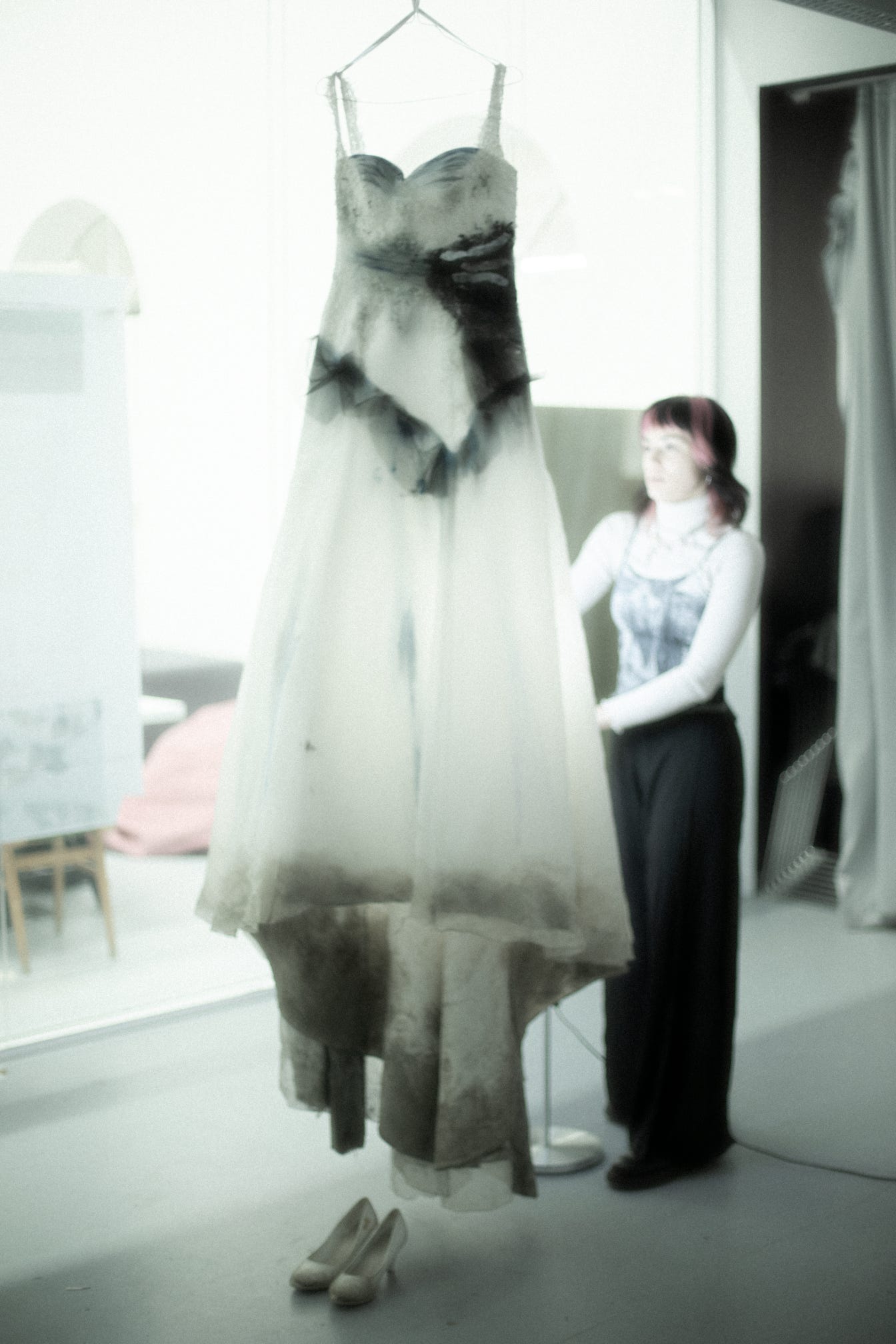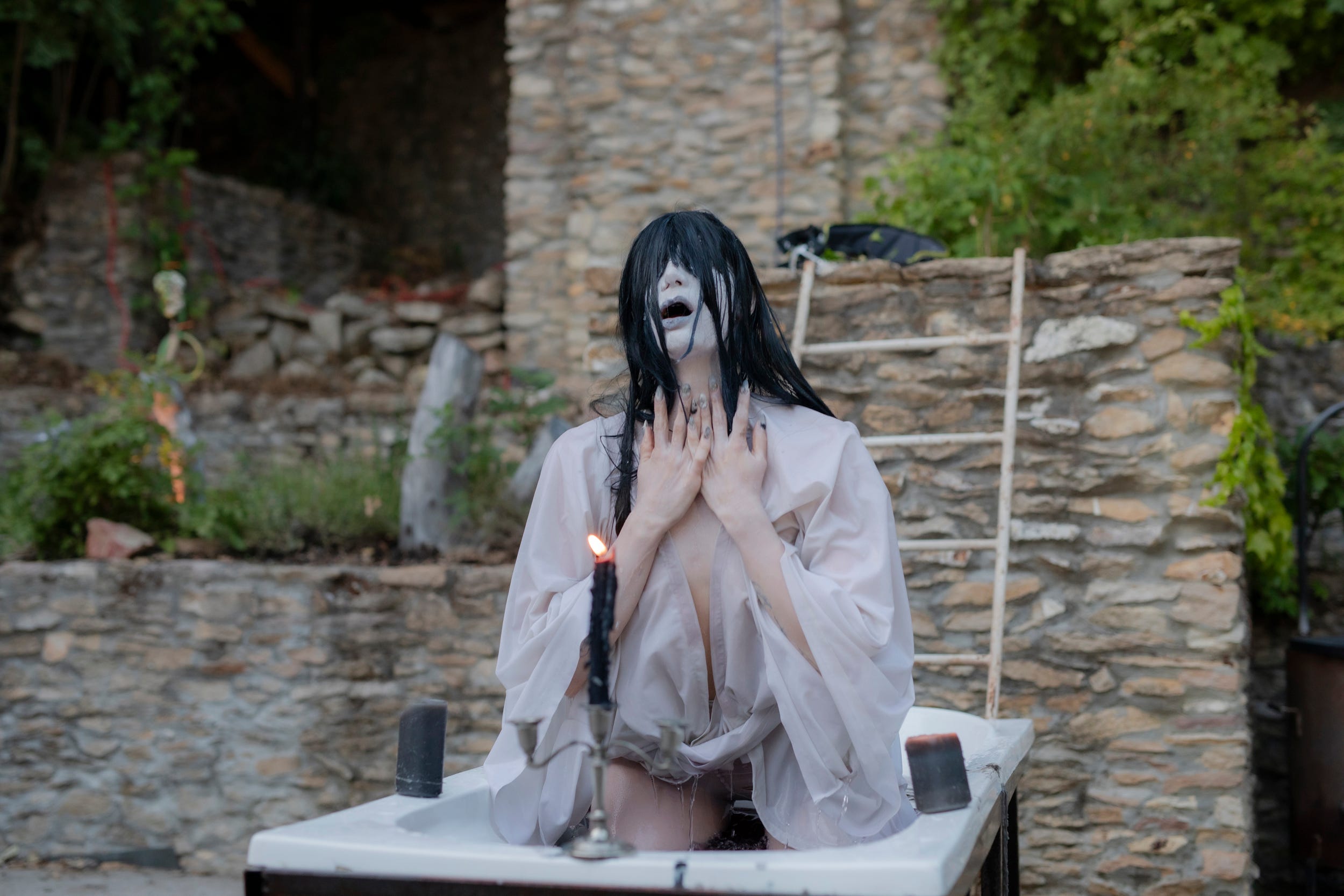
Valentina Várhelyi grew up in a Roma family, where heritage was integrated into a modern way of life. This background fostered a lasting sense of curiosity and humility that continues to shape her practice. Frequently engaging with Roma heritage, folk traditions, and magical practices, she approaches these elements not as static symbols but as living materials through which to question and reframe dominant narratives of identity. Beginning with an early interest in literature, her work expanded into theatre and music, and later into art history and curatorial practice, before finding a sustained focus in performance and intervention-based art. Her practice draws on actionist and situationist influences and unfolds through intuitive, experimental processes.
Instagram: www.instagram.com/valuska___
Valentina Várhelyi was recommended by Martha Kicsiny.


What themes and motifs do you explore in your art?
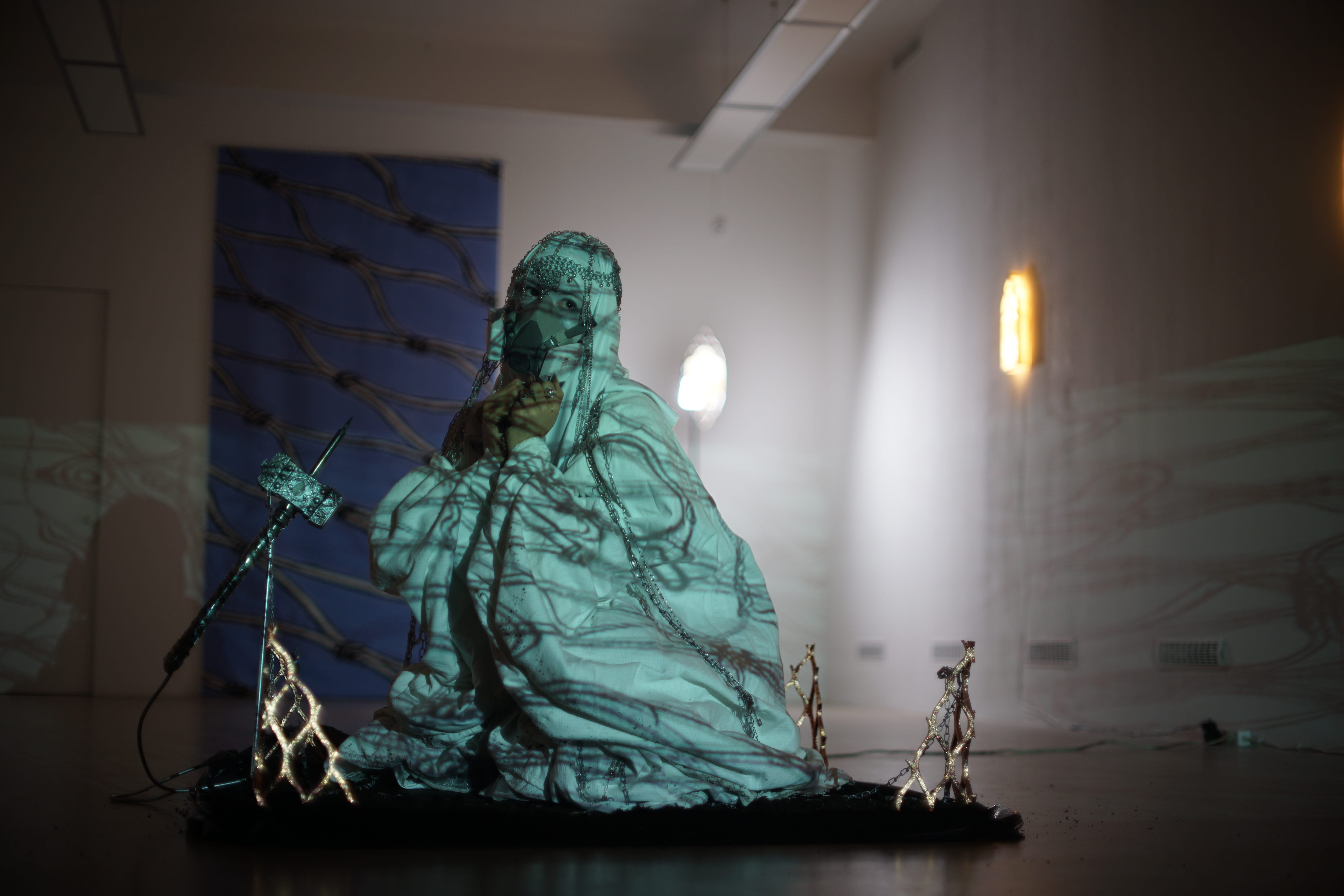
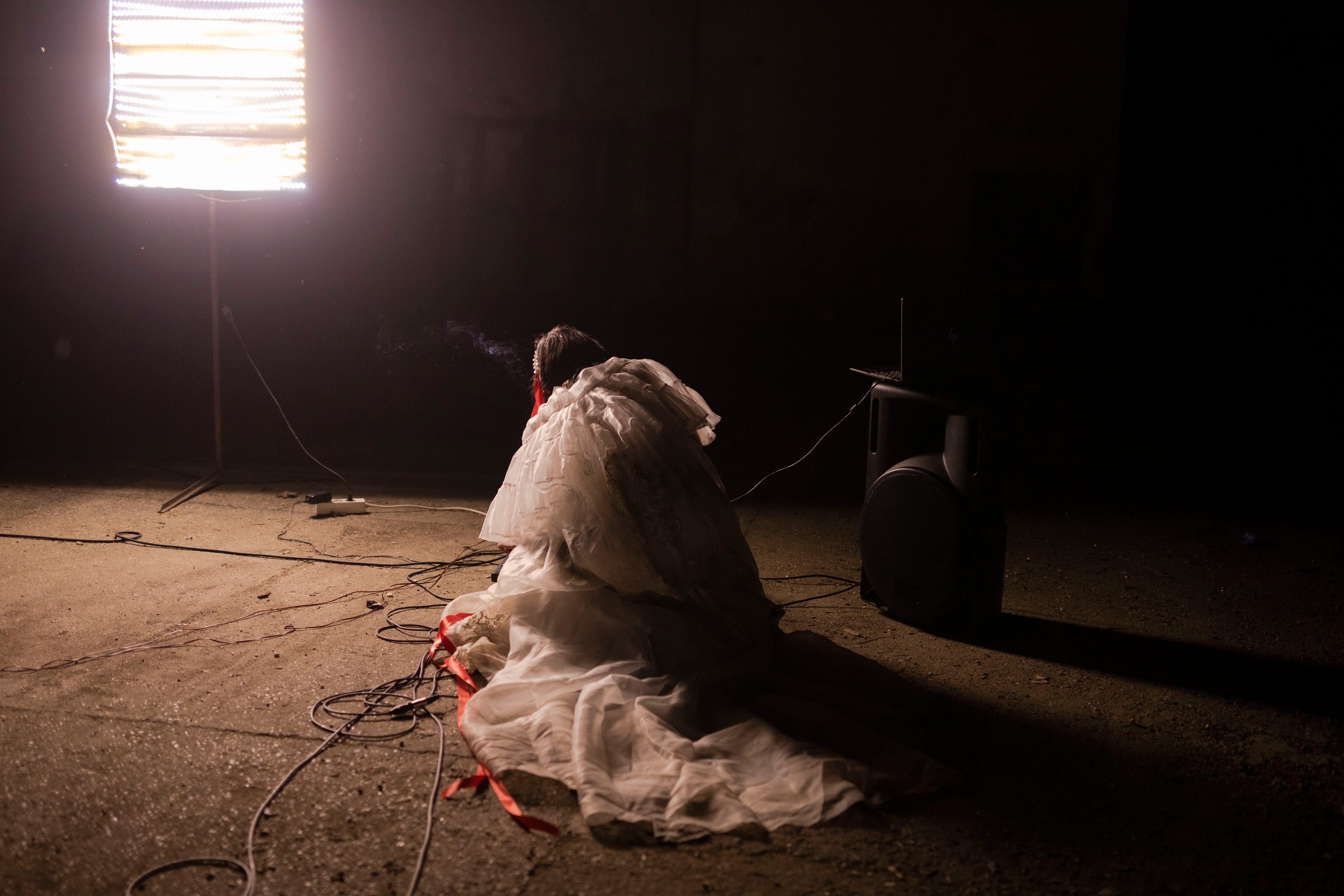
My art mainly revolves around motifs drawn from magic and pageantry. I am deeply interested in iconography, and I search for meeting points between everyday rituals and canonised belief systems. As a performance artist, I often work with historical archetypes and contextualise them by imagining how these figures might survive within contemporary frameworks. I frequently allow myself to be led by characters, letting my body become a vessel for them. The symbol of the white dress is also recurring in my work; I have explored this garment in many forms—worn by the bride, the surgeon, the priest, the newborn, and the woman returning from the dead.
What drives you to do what you do?
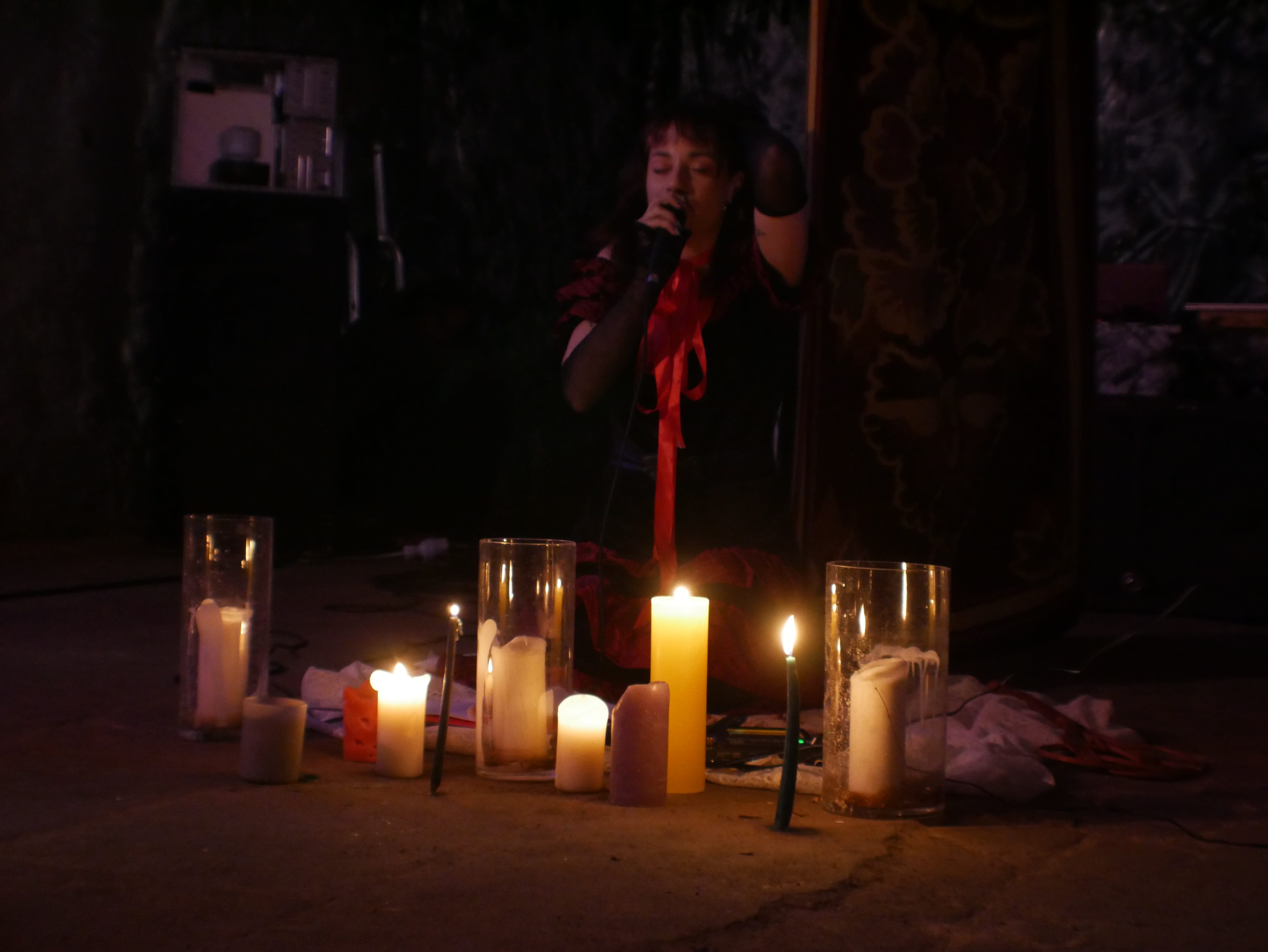
I am convinced that art can generate social change, and my practice is deeply shaped by this belief. I place myself in uncomfortable situations not only to present misinterpreted or marginalised characters, but also to evoke empathy in the viewer and reintroduce these hidden archetypes into capitalist society. I strongly believe in the power of community, and my motivation comes from bringing people together and offering shared experiences that encourage connection.
What kind of atmosphere do you like when you work? Why?
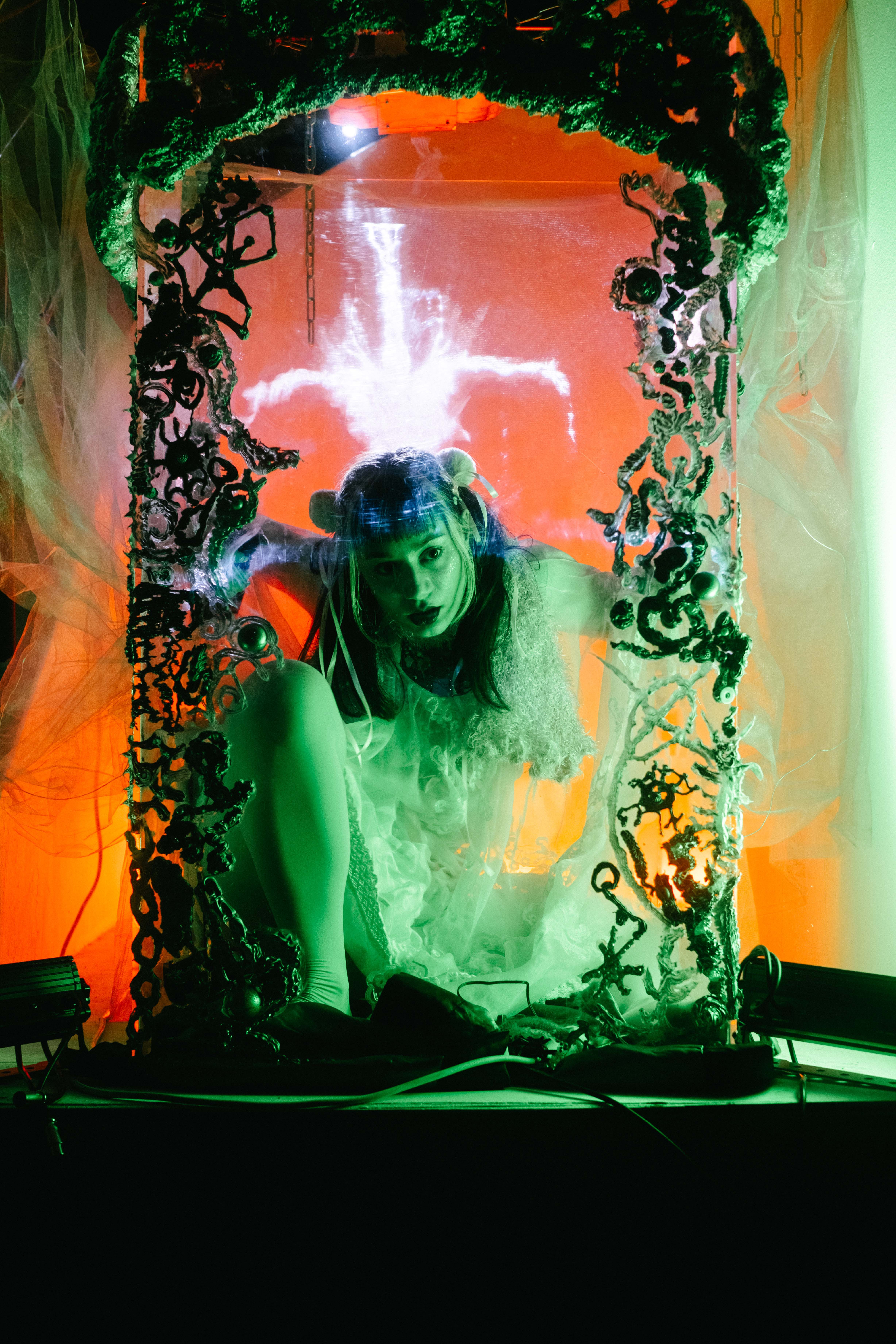
I am drawn to a balance between chaos and order. I often need to feel pressured or constrained while creating, as this helps me connect more deeply to my core messages. I enjoy working alone, though another pair of eyes can be helpful during more advanced stages of the process. When I am in flow, I am free to play and explore at my own pace, allowing objects to speak to me.
What are you curious about? What would you like to explore further?
I am particularly interested in gaze and attention, even though this topic is largely popularised in a world dominated by screens. In the coming months, I would like to explore how our attention have shifted in recent years and the effects of this on the surveillance systems. The other topic I can nerd out about is Tudor England. I feel a strong affinity for the era’s customs, rituals, and legends rooted in Celtic heritage. I always try to synthesise my varied interests within my work, which can elevate a piece, but can also risk overcomplicating the narrative.


Where are you based and what do you like about the local art scene?
I am based in Budapest, and although surviving as an artist in Eastern Europe can be challenging, the city has a vibrant and resilient art scene. Due to limited resources, artists have learned to adapt, often working with found materials and DIY methods. The local community is diverse and dynamic, with subcultures and movements constantly emerging, creating alternative narratives and supporting the interdisciplinary discourse. Collaboration across different media is common; while it often emerges as a coping mechanism in the absence of institutional support, it also allows artists to work with greater freedom and fewer expectations.